
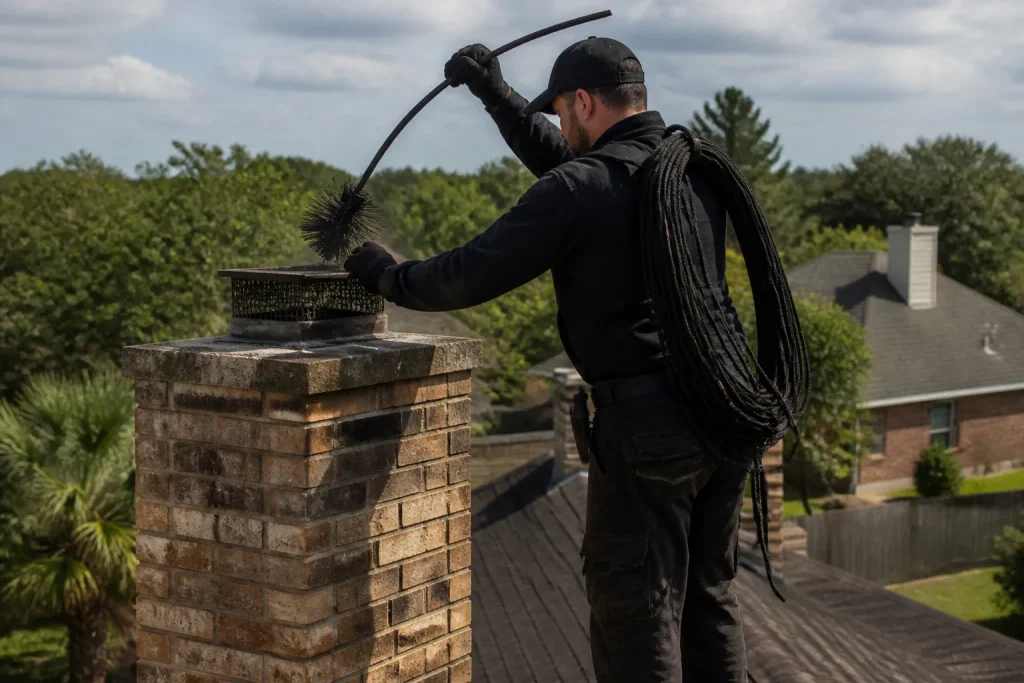
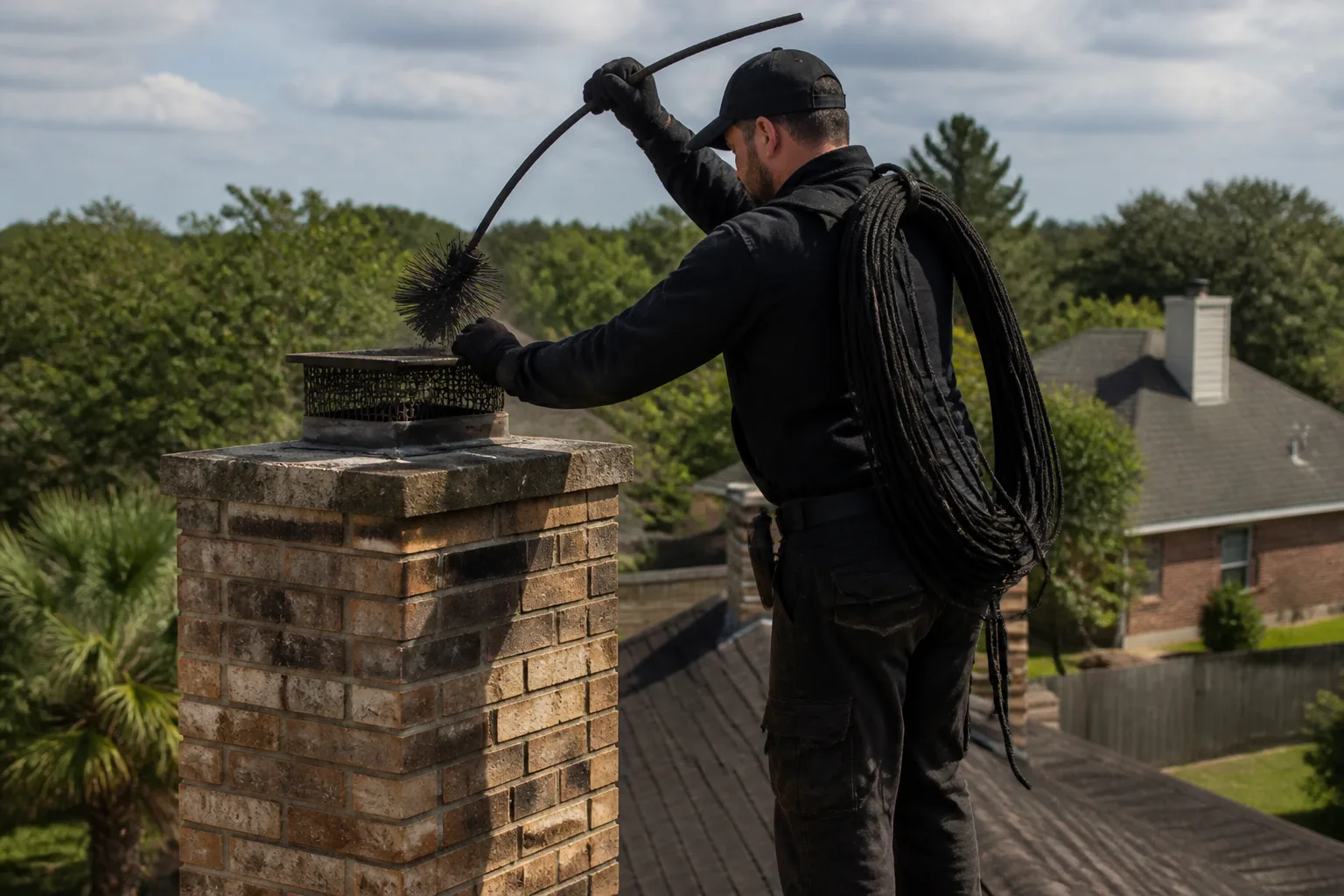
DuraFlex Chimney Sweep in Alief: A Homeowner’s Guide
DuraFlex doesn’t clean your chimney – it permanently resurfaces the inside of it. If a contractor is quoting you DuraFlex without explaining that difference, that’s worth pausing on. The term gets thrown around loosely, and plenty of Alief homeowners end up pricing one thing while imagining another. This guide breaks down what DuraFlex actually is, who it’s for, and how the sweep visit fits into the job. If you’d rather have a specialist walk you through it, call (855) 337-1823 for a free estimate.
What Is DuraFlex, Exactly?
DuraFlex is a castable refractory resurfacing compound. It is not a flexible stainless liner, and it is not a sleeve. It’s a cement-like material that gets applied to the interior walls of a damaged masonry flue, then cured in place to form a new, smooth, heat-resistant surface. Think of it as rebuilding the flue from the inside out rather than sliding a new pipe through it.
This matters because the two products solve different problems. A stainless sleeve liner is a pipe inside your chimney. DuraFlex restores the masonry itself. For a clay tile flue with cracked or spalled joints, resurfacing can be the more appropriate fix because it addresses the original structure rather than routing around it.
We use DuraFlex as part of our liner and repair work alongside HeatShield, Gelco, Olympia Chimney, Famco, and Copperfield – materials chosen to match the specific condition of your flue, not applied by default. Here’s what a DuraFlex job actually involves:
- Assessment. A camera inspection confirms whether the flue is a candidate for resurfacing or whether a different repair makes more sense.
- Surface preparation. The flue is cleaned and any loose or crumbling material is removed. The compound needs a sound surface to bond to.
- Application. The compound is applied to coat the interior walls evenly.
- Curing. The material hardens into a new flue surface.
None of that is cleaning. The sweep is the opening act.
Why the Sweep Comes First – and Why It Isn’t Optional
You cannot apply DuraFlex to a dirty flue. Creosote, soot, and loose masonry dust all interfere with adhesion, and a coating that doesn’t bond properly is a coating that fails. That’s why every DuraFlex job in Alief starts with a full chimney sweep and a camera inspection before any compound goes in.
The preparation protocol is specific, and shortcuts show up later:
- Full sweep of the flue. All creosote and soot removed, not just the visible sections.
- Camera inspection. A video scan of the full flue length identifies cracks, spalling, gaps in the clay tile, and any offset or obstruction.
- Removal of loose material. Crumbling tile or mortar has to come out. DuraFlex needs something solid underneath.
- Surface prep. The flue walls are readied so the compound can bond across the full surface.
If a contractor skips the camera inspection and quotes you DuraFlex on sight alone, that’s a sign to ask questions. We offer inspections as a standalone service because an honest assessment should come before any repair recommendation, not after.
Where DuraFlex Makes Sense in Alief Homes
Alief has a lot of older brick construction, and the clay soil here shifts with the seasons. That combination produces a specific damage pattern: hairline cracks in the flue tile, separation at the mortar joints, and spalling where moisture has worked its way in over time. Winters here are mild, so you won’t see the frost damage common in colder regions, but the ground movement and age of the housing stock do their own work.
That’s where DuraFlex outperforms a stainless sleeve in certain cases:
- Settlement cracks in the masonry. A sleeve routes around a damaged flue; resurfacing repairs the flue itself.
- Irregular or offset flues. Older Alief chimneys often have shapes and bends that a rigid liner doesn’t fit well.
- Multiple small cracks across a wide area. Resurfacing coats the whole interior; a sleeve only addresses the passage.
- Flues where the original tile is still structurally sound but the surface has degraded. Resurfacing preserves what’s there.
A stainless liner is the right call in plenty of situations too, particularly when the flue is badly out of shape or when a heating appliance needs a specific venting setup. The point isn’t that one product wins. It’s that the choice should come from what the camera shows.
The Curing Process: What to Expect
Curing is where a DuraFlex job either succeeds or quietly fails, and it’s the part homeowners know least about. The compound needs time and the right conditions to harden properly. Rush it and you get a coating that cracks, flakes, or never bonds correctly.
What to expect:
- 1
Timeline. Curing takes time after application, and the flue needs to be left alone while it sets. Your contractor should tell you exactly how long before you use the fireplace.
- 2
Smell. A new cure can produce an odor during the first few fires as residual material burns off. It’s normal and fades.
- 3
The first test fire. The first burn after curing should be watched. You’re checking for smoke where it shouldn’t be and for any odd behavior.
- 4
What a failed cure looks like. Flaking inside the flue, cracking along the new surface, or a coating that separates from the wall. A failed cure usually traces back to prep, not the product.
If something seems off after the first fire, call before you burn again. A quick inspection catches most problems while they’re still small.
The Warranty Reality
DuraFlex carries a manufacturer warranty. That warranty is voided by improper application prep. Read that again, because it’s the single most important thing to understand about this product.
The warranty protects against defects in the material. It does not cover a job where the flue wasn’t cleaned properly, where loose material was left in place, or where the compound was applied to a surface it couldn’t bond to. In practice, that means the quality of the prep work determines whether you have warranty coverage at all.
This is why hiring an applicator who follows the manufacturer’s protocol matters more here than it does with almost any other chimney repair. We handle DuraFlex installation as part of our Chimney Sweep Alief services, and we’ll walk you through what the prep involves before any work starts. If you’re comparing quotes, ask each contractor what their preparation steps are. The answer tells you a lot.
When to Call a Pro
DuraFlex application is not a homeowner project. The material, the prep, and the cure all require equipment and training most people don’t have, and a bad application voids the warranty and leaves you with a flue that needs to be redone. If you’re seeing cracked flue tile, crumbling mortar inside the chimney, or you’ve been told your flue needs relining, that’s the moment to bring in a specialist.
If your fireplace itself is acting up – smoke rolling into the room, a damper that won’t close, cracks in the firebox – that’s a separate issue and falls under fireplace repair. Water getting in around the top of the chimney is usually a cap or crown problem, which we cover under chimney cap & crown work. And if you just want to know where your chimney stands before you spend anything, start with an inspection.
Related services in Alief: chimney sweeping, cap and crown repair, fireplace repair, and full chimney inspection – one specialist handles all of it.
The Bottom Line
DuraFlex is a resurfacing system for damaged masonry flues, not a cleaning product and not a stainless liner. The sweep and inspection that come before application are what make the job work – and what keep the manufacturer warranty intact. If you’re in Alief and your flue has cracked tile, spalling, or settlement damage, a camera inspection is the right first step. It tells you whether resurfacing, a sleeve liner, or nothing at all is the honest answer.
If you’re in Alief and need help, Chimney Sweep Alief offers free estimates – call (855) 337-1823. We answer 24/7. Fast dispatch from 7am to 7pm, Sunday through Friday. Our technicians have up to 9 years of experience, and an inspection comes before any repair recommendation.
Frequently Asked Questions
No. DuraFlex is a castable resurfacing compound applied to the interior of a masonry flue, not a flexible stainless sleeve. A liner is a pipe inserted into the chimney; DuraFlex restores the flue walls themselves. Both are relining options, but they work differently and suit different damage profiles. Call (855) 337-1823 for an exact quote – estimates are free.
Yes, always. The flue must be fully swept and inspected, and any loose or crumbling material removed, before the compound goes in. Prep determines whether the coating bonds and whether the manufacturer warranty stays valid. Call (855) 337-1823 to book a sweep and inspection.
The flue needs to cure before you burn, and the timeline depends on the job. Your contractor should give you a specific window. The first fire after curing should be watched for smoke or odor, which is normal during the initial burn-off. Call (855) 337-1823 if anything seems off after that first burn.
It depends on what the camera shows. DuraFlex tends to suit older Alief brick homes with settlement cracks, spalling, or irregular flue shapes where resurfacing the original masonry makes more sense than inserting a sleeve. A stainless liner is often the better fit for badly damaged or offset flues. An inspection settles it. Call (855) 337-1823 for a free estimate.
Written by the team at Chimney Sweep Alief.
Need Chimney Cleaning Help?
Call Chimney Sweep Alief - the local pro we connect you with is licensed and insured, with free written estimates in Alief.
(855) 337-1823