
Last updated November 24, 2026
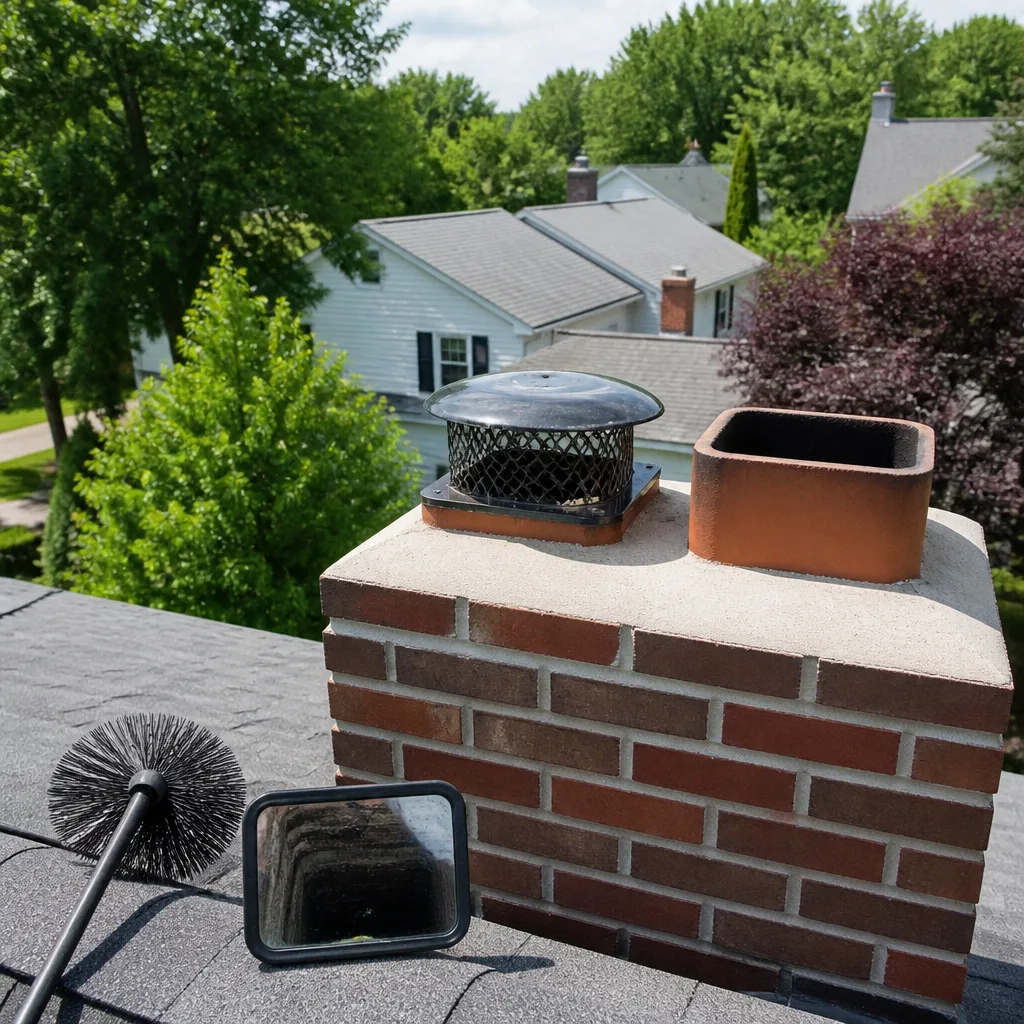 Sweep & inspection
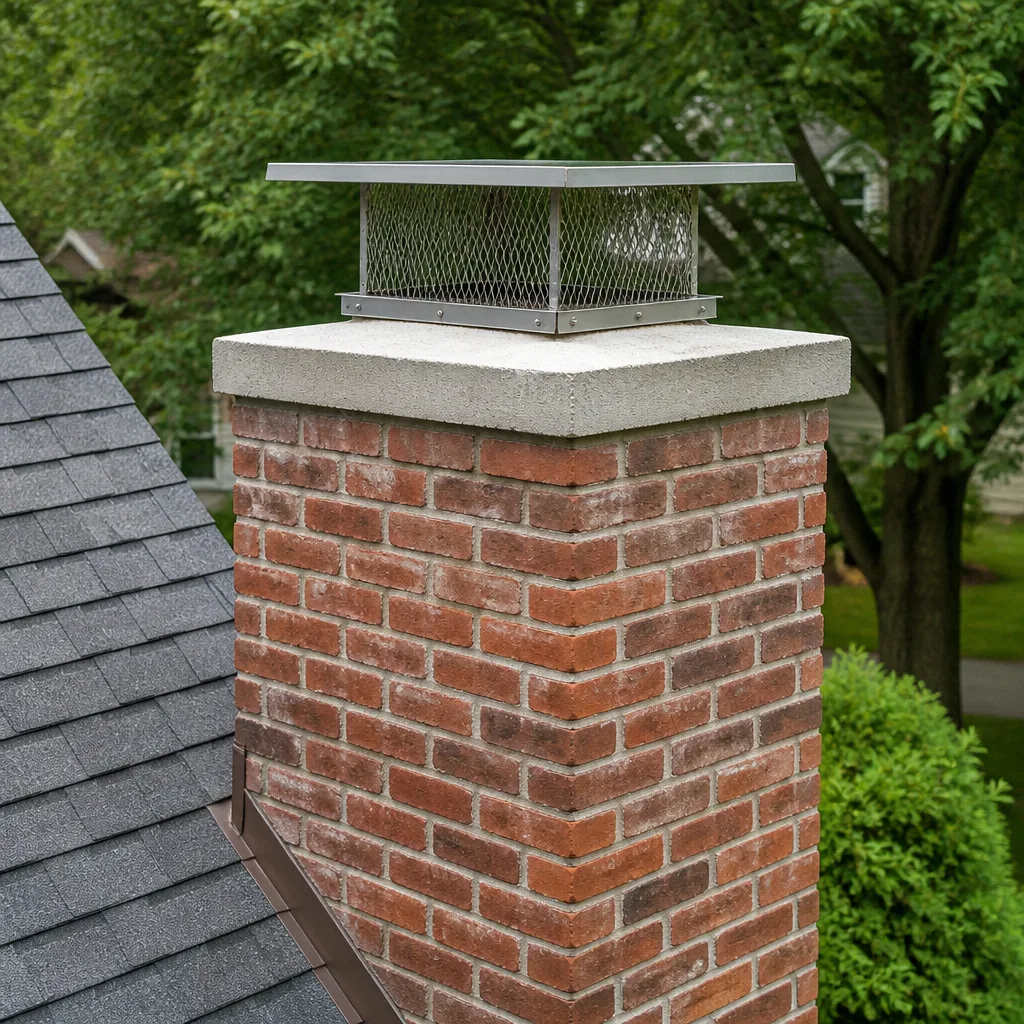 Caps & crowns
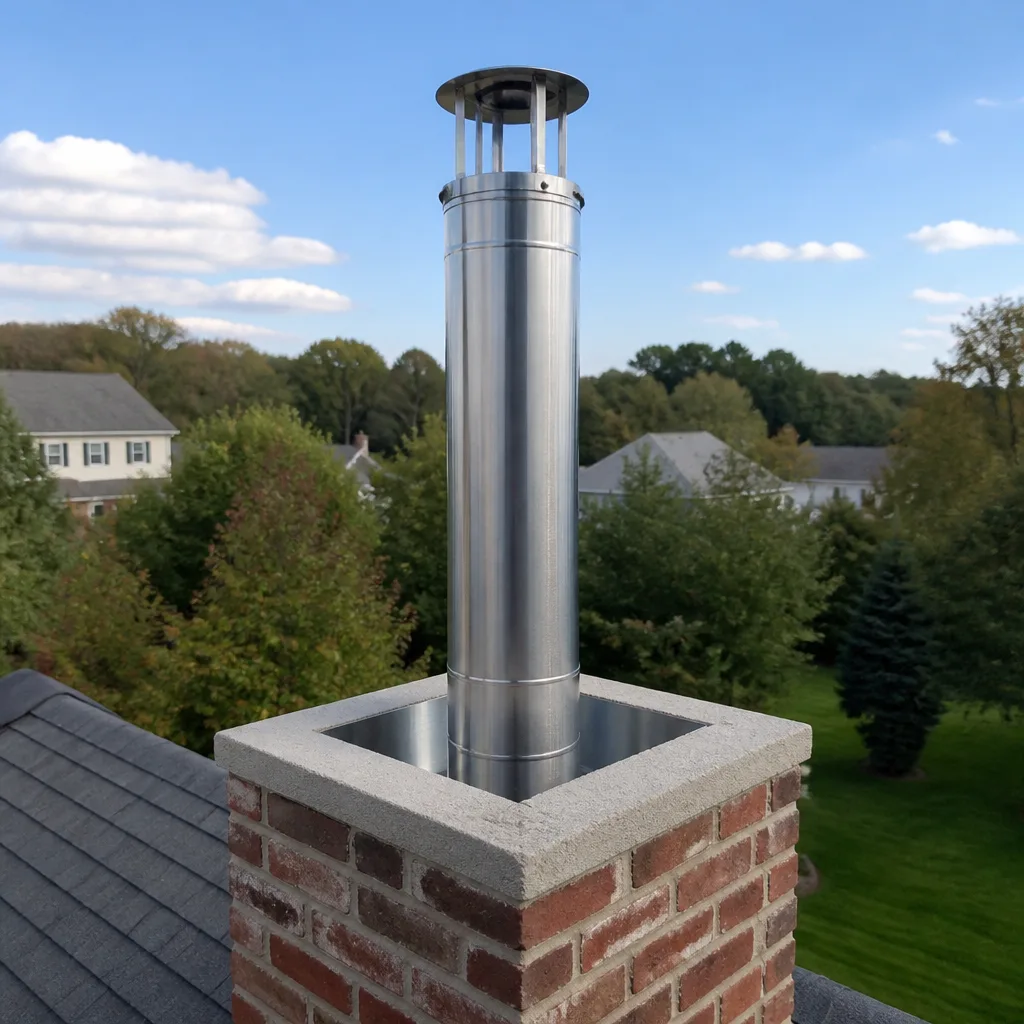 Flue relining
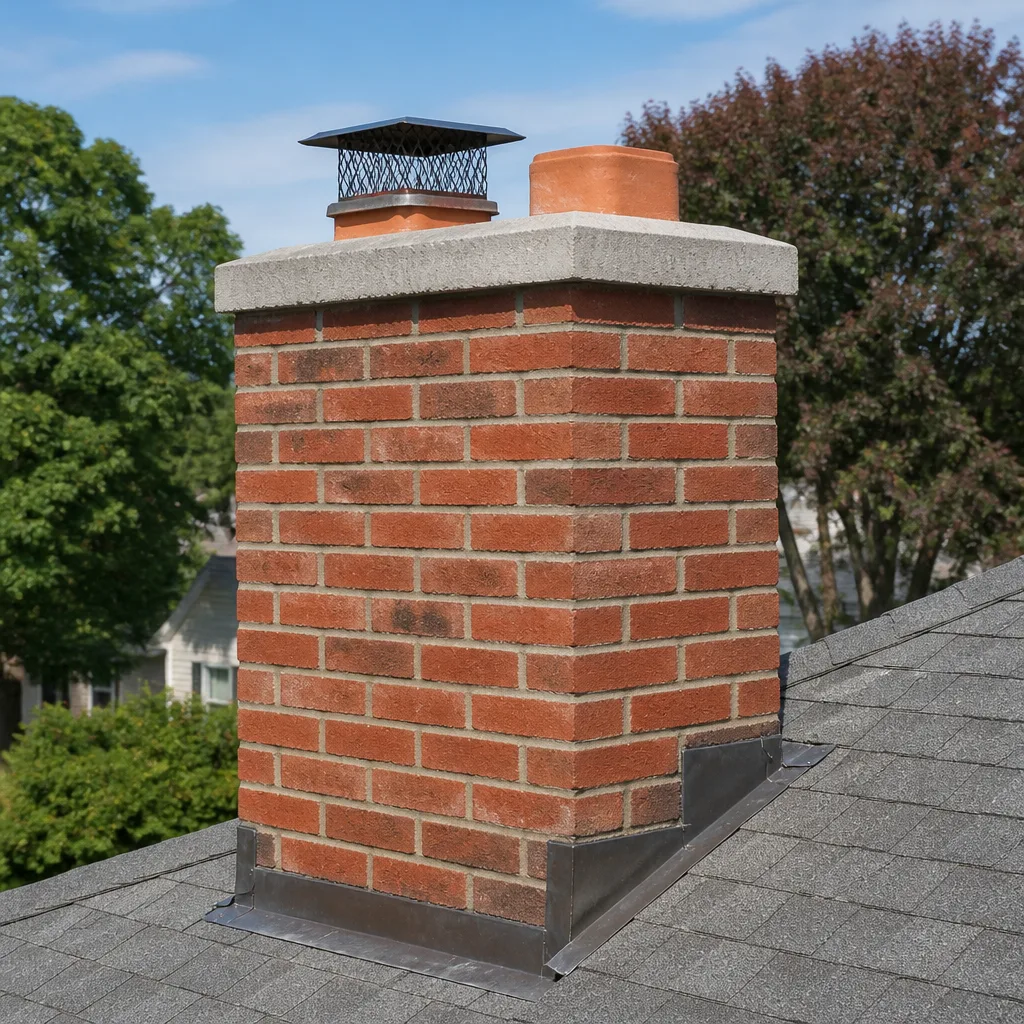 Masonry repair
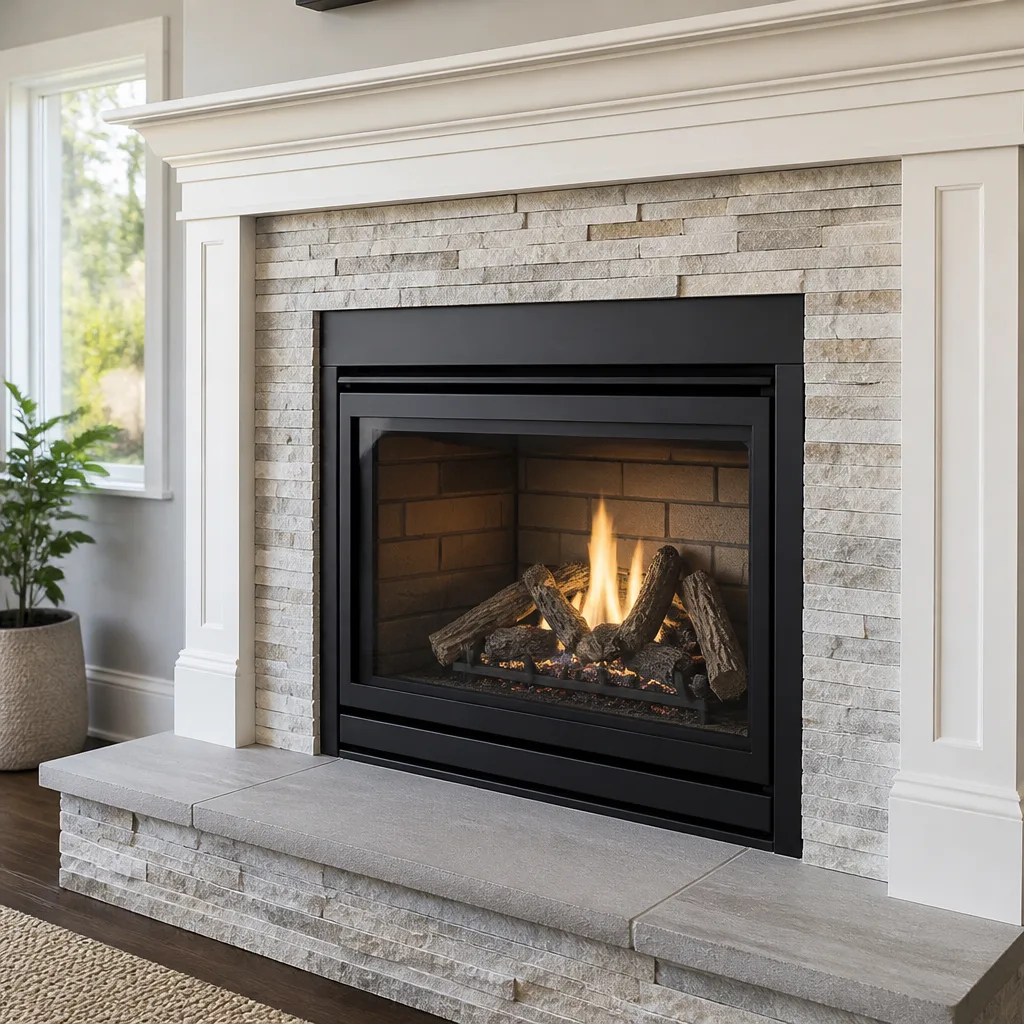 Gas fireplace service
Level 1 sweep and inspection to the NFPA 211 annual standard - flue, crown, cap, and flashing checked and photographed
Chimney sweep logs do not sweep chimneys. They loosen some creosote - which then falls where a brush and vacuum still have to collect it.
Chimney Sweep Maintenance Checklist for Alief Homeowners
Most Alief homeowners assume the firebox is where chimney problems start. It rarely is. The parts of a chimney that fail first in this part of Houston are the ones you almost never see: the crown on top, the flashing where the chimney meets the roof, and the damper plate tucked up above the fire. A decade can pass without anyone giving those three a real look. What follows is a room-by-room, component-by-component routine you can run yourself between professional visits, plus a clear line between what’s safe to check on your own and what needs a trained eye. Nothing here requires a ladder.
Quick Answer
A working chimney maintenance checklist for an Alief home has two halves. The homeowner half is a visual pass you do from the ground and from inside the firebox once a season: looking for cracked crowns, rusted dampers, water staining, and loose flashing. The professional half is an annual chimney sweep and inspection that clears creosote, checks the flue, and confirms the whole system is sound. Neither half works alone. A visual check tells a technician where to look; a sweep and inspection confirms what’s actually going on.
Styles & brands we work with
- Sweep & inspection
- Caps & crowns
- Flue relining
- Masonry repair
- Gas fireplace service
Table of Contents
- Why Alief Chimneys Need a Different Checklist
- The Ground-Level Pass: What You Can See Without a Ladder
- The Interior Pass: Reading the Firebox and Fireplace
- Spotting Humidity and Storm Damage After Alief Rain
- What’s DIY-Safe and What Needs a Certified Sweep
- Seasonal Timing for Each Checklist Item
- How to Log Findings So You Can Show the History
- The Year-Round Maintenance Calendar
Why Alief Chimneys Need a Different Checklist
Alief sits in a warm, humid pocket of southwest Houston where the chimney’s biggest enemy isn’t the fire inside it. It’s the moisture outside. Winters here are mild, so a wood-burning fireplace may only see real use across a short stretch of the year. That quiet season is exactly when the chimney sits, damp and unattended, taking on water. Then summer arrives with heavy, driving rain and tropical moisture that pushes against every seam on a roof.
That pattern changes what deserves your attention first. In colder climates, a homeowner’s chief worry is creosote buildup from a long heating season. In Alief, the far more common failure path runs through the top of the chimney: a cracked crown lets water in, the flashing pulls loose and rain finds a path down the roof line, and the damper rusts shut or seizes. By the time the fireplace is used again, the damage has had months to settle.
The checklist below is built around that reality. It treats the chimney cap & crown and the flashing as first-class maintenance items, not afterthoughts. It also treats a visual inspection as something a homeowner can do well. You know your house better than anyone who visits it once a year. The job here is to give you a routine that turns that knowledge into something a technician can act on.
We work with the materials chimney professionals specify for exactly this kind of preventive work: DuraFlex and Olympia Chimney liners, HeatShield for flue resurfacing, and Gelco and Copperfield components. The reason matters for the checklist: a chimney that’s been properly capped and crowned simply has less water to deal with, and less water means fewer of the repairs below.
The Ground-Level Pass: What You Can See Without a Ladder
You don’t need to climb anything to start. A good pair of eyes and a pair of binoculars will do. Stand back from the house and work through this pass once before the burn season and once after the storm season. It takes about ten minutes.
Here’s the sequence:
- Find the chimney crown. It’s the concrete or mortar slab on top that sheds water away from the flue. Look for visible cracks, a crumbling edge, or a crown that has pulled away from the flue pipe. A crown doing its job angles water off; one with cracks sends it straight down inside.
- Check the cap. The cap is the metal hood over the flue. It should sit square and intact, with no bent panels or rusted-through spots. A cap that’s come loose or rusted out lets rain and animals in.
- Look at the flashing. That’s the metal where the chimney meets the roof. Run your eye along the seam. Pried-up edges, gaps, or missing pieces of sealant are where water gets in.
- Scan the chimney’s exterior surface. Masonry mortar joints that look washed out, white powdery staining, or spalling brick all point to moisture that’s been working in over time.
- Look at the roof around the chimney base. Dark streaks, soft spots, or staining on the shingles nearby can trace back to the flashing above.
- Step back and look at the whole stack. Is it straight? Any lean or separation from the roofline is worth a professional look.
Write down what you see. That log becomes the starting point for the next section, and it’s the single most useful thing you can hand a sweep when they arrive.
The Interior Pass: Reading the Firebox and Fireplace
Now go inside. The firebox and the area around the fireplace tell a story about the chimney above it. If water or creosote has been a problem, you’ll usually see it here first.
Start with the firebox itself. The firebrick or masonry lining should be intact, with no chunks missing and no wide cracks you can see through. Then look up with a flashlight. The damper plate should open and close smoothly and seat flat when closed. A damper that sticks, won’t close fully, or is frozen in place is a common finding in Alief homes, and it’s usually about moisture and rust, not wear.
Next, check the surrounding wall and ceiling:
- Water stains on the brick around the fireplace opening, or paint bubbling on the wall nearby
- Damp or musty smells inside the firebox when the fireplace is unused and the damper is closed
- Rust streaks on the damper, the firebox hardware, or the smoke chamber above
- Crumbling mortar in the firebox joints or the hearth face
- Gaps between the fireplace surround and the wall, or between the hearth and the floor
Look inside the firebox for flaking creosote. Creosote in its sticky or flaky form is flammable, and a chimney fire starts when it ignites. A thin soot film is normal. Glazed or crumbly buildup is not something to leave in place. If the firebox or fireplace itself needs work, that’s fireplace repair territory, and it’s a separate job from sweeping.
Finally, when you’re done, check that the fireplace doors and screen are intact and that the smoke shelf above the damper is clear of nesting material. Animals find their way into open flues, and a cap fixes the source.
Spotting Humidity and Storm Damage After Alief Rain
Alief’s weather does most of the damage to chimneys here, and it does it quietly. The pattern worth understanding is the one-two punch: a long, damp shoulder season that keeps the system moist, then heavy summer storms that drive water sideways at every gap. The flashing and the crown are the two spots that fail under that pattern most often.
After a heavy rain, do a short walk-around and look for these signs:
- Water on the firebox floor. Dampness or a puddle inside the firebox after a storm means water is getting past the cap, crown, or flashing.
- Piecrust or powdery white staining on the exterior brick. That’s efflorescence, a sign of moisture moving through the masonry. It doesn’t mean the chimney is failing, but it’s a signal the exterior is taking on water.
- Sagging or loosened flashing. Look at the metal seam where the chimney meets the roof; heavy rain often reveals a gap you couldn’t see when everything was dry.
- Musty smell inside when the fireplace isn’t in use. That’s trapped moisture and poor ventilation, and it points back to the cap and damper.
- Paint or stain peeling around the fireplace wall. Moisture migrating through the chimney structure will show up on interior surfaces before it shows up outside.
None of these means a repair is certain. They mean it’s time to get a professional look and a photo-based assessment before deciding anything. It’s one of the reasons we offer chimney inspection as a standalone service: you can have the system looked at honestly before anyone recommends work, and you’ll have pictures to see for yourself.
What’s DIY-Safe and What Needs a Certified Sweep
This is where a checklist earns its keep: knowing which items you can safely do yourself and which ones you should not. Getting this wrong is how a homeowner ends up injured or makes a small problem worse.
Safe for you to do, no tools beyond a flashlight and a pair of binoculars:
- The ground-level visual pass (crown, cap, flashing, exterior)
- The interior visual pass (firebox, damper operation, wall and ceiling around the fireplace)
- Checking and cleaning out the hearth and firebox of ash
- Making sure the fireplace screen and doors are intact
- Keeping the area around the fireplace clear
- Calling for a professional chimney sweep when it’s due
Not safe to do yourself, and needs a trained technician:
- Climbing the roof to inspect the crown, cap, or flashing directly
- Sweeping the flue. This requires proper brushes and a working knowledge of the flue’s condition. Doing it blind can force creosote down into the smoke chamber or damage a liner you can’t see.
- Anything involving the flue liner. A damaged liner, or one that’s been compromised, is a serious safety issue. Do not try to assess or repair it yourself. HeatShield and DuraFlex liner work is a job for a specialist, and it starts with a camera inspection that shows what’s actually going on.
- Any repair to the crown, cap, or flashing. Beyond the fall risk, water damage is easy to misdiagnose from the ground.
- Firebox or masonry repairs. These are structural, and the fix needs to be right the first time.
A simple rule: if it involves a ladder, a chimney brush, or opening up the flue, leave it to a professional. The visual pass is yours. The invasive work isn’t.
Seasonal Timing for Each Checklist Item
Timing matters more than most checklists admit. A maintenance task done at the wrong time of year produces less useful information. In Alief, the burn season is short and the storm season is long, which shapes when each item is worth doing.
Here’s how we’d sequence it:
- Early fall: the full sweep and inspection. Before the first burn, have the chimney swept and inspected. This clears the creosote from last season and confirms the flue, cap, and damper are ready. This is also the best time to schedule a Level II inspection if you haven’t had one, since it’s the last clear window before the fireplace sees use.
- Late fall, before the burn season: the interior pass. Check the damper operation, the firebox lining, and the walls around the fireplace. Confirm the cap is intact. This is your last easy chance to catch something before the first fire.
- During the burn season: the as-you-go checks. Keep the firebox cleared of excess ash, watch for unusual smoke or smells, and stop using the fireplace if you notice flaking creosote or any sign the flue is blocked.
- Late winter, after the last burn: the post-season visual pass. Now the chimney sits idle for months, and standing moisture is the risk. Check the firebox for water and the exterior for efflorescence.
- Spring, around the start of heavy rain: the storm pass. Re-check the flashing, crown, and cap before the summer storms. If the crown or flashing is suspect, this is the time to fix it, before water has all summer to work in.
- Summer and early fall: post-storm inspections. After any major rain event, do the inside-and-outside pass again. The summer is when Alief’s driving rain tests the seams.
The one item that’s easy to skip: the professional sweep itself. A short burn season makes it feel optional. It isn’t. The annual chimney sweep is what keeps a small problem from becoming a big one, and it’s what tells you whether the creosote in your flue is safe to leave or not.
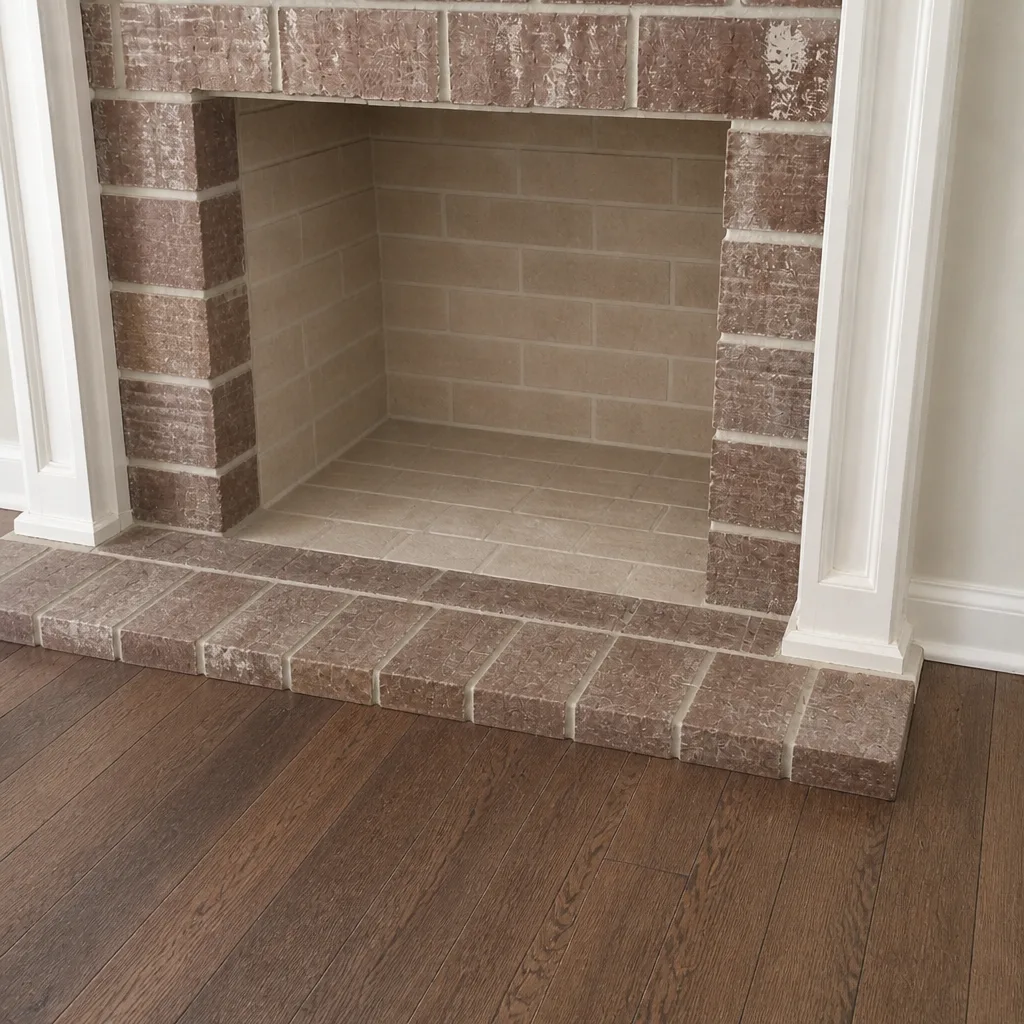
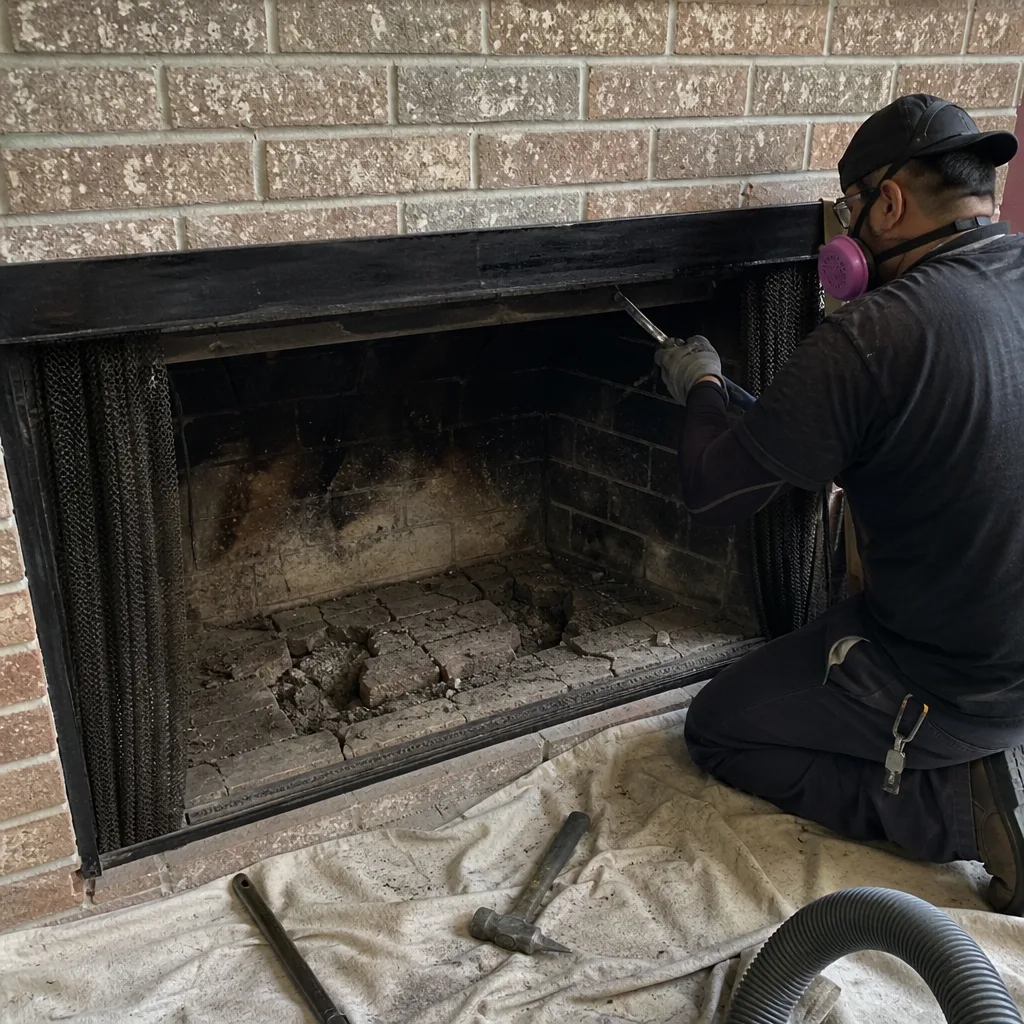
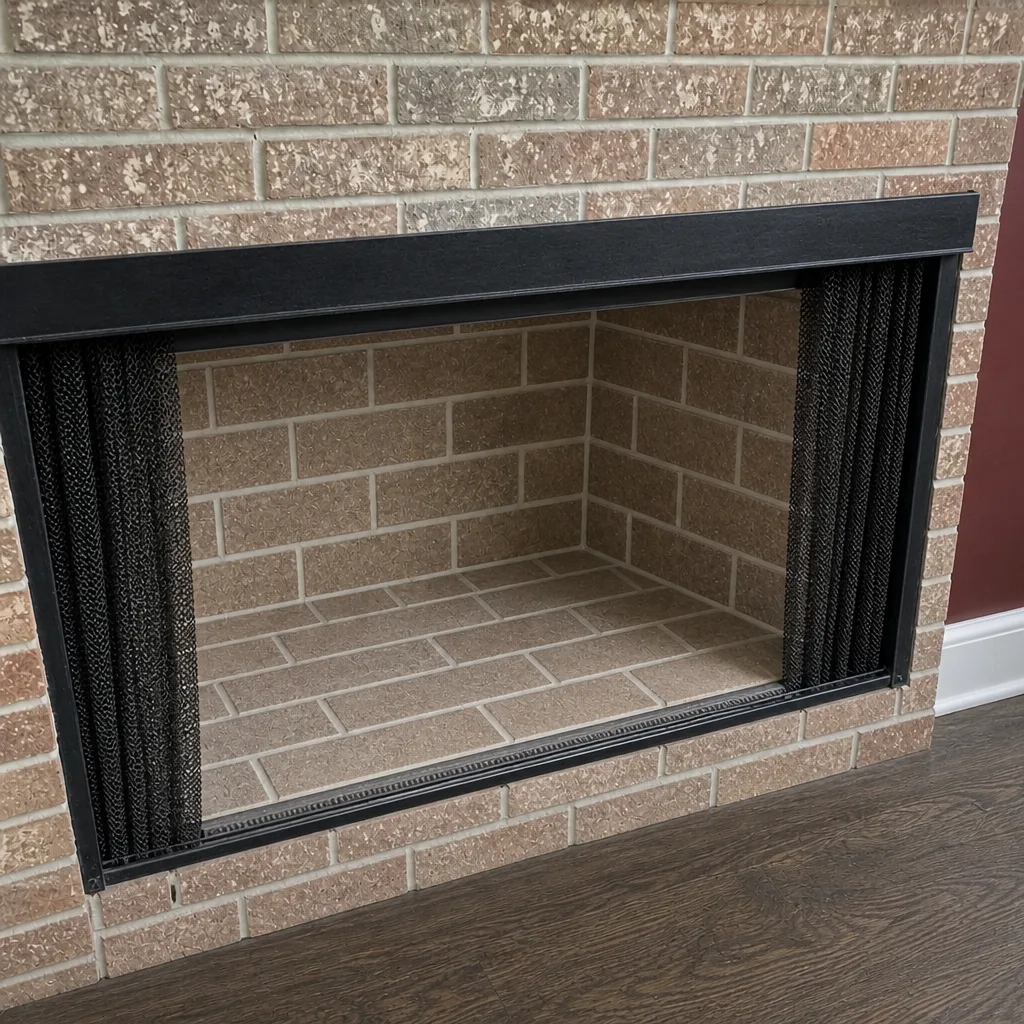
See the difference
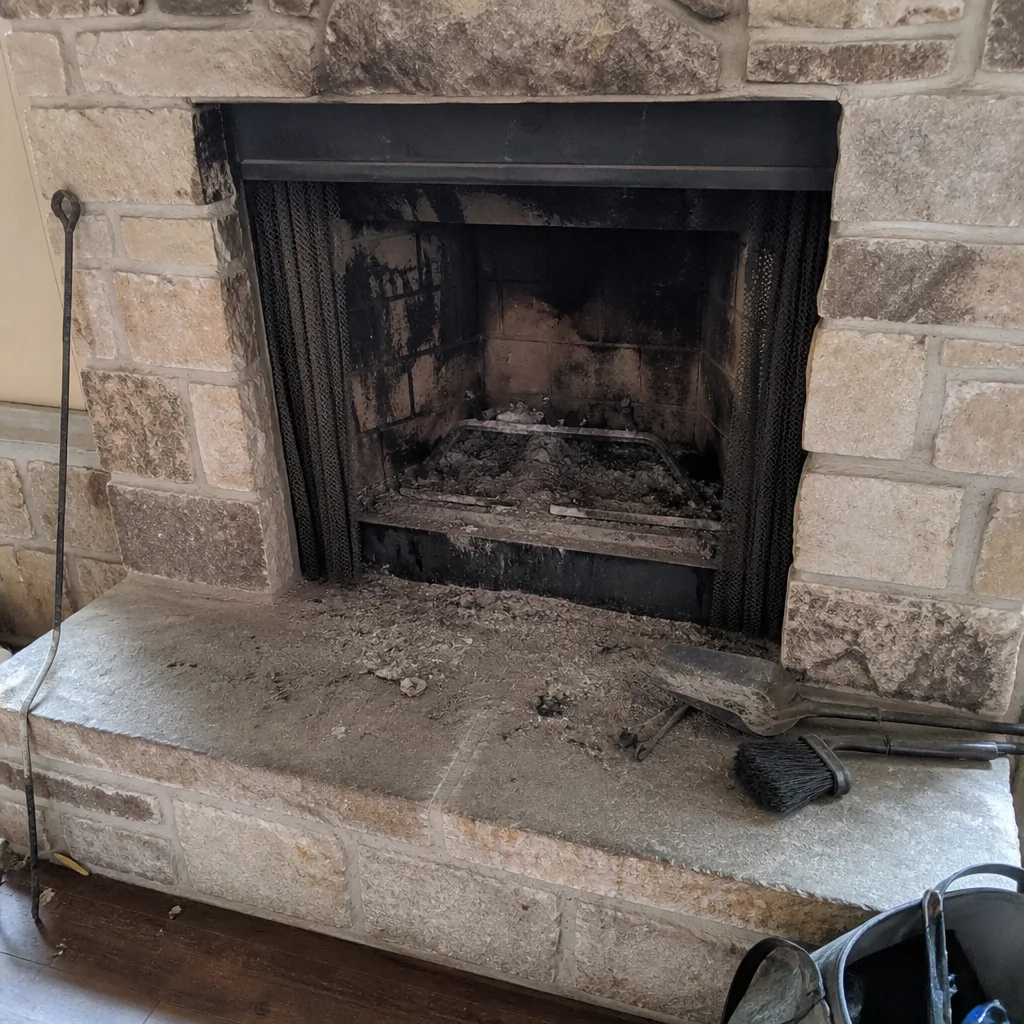 Before
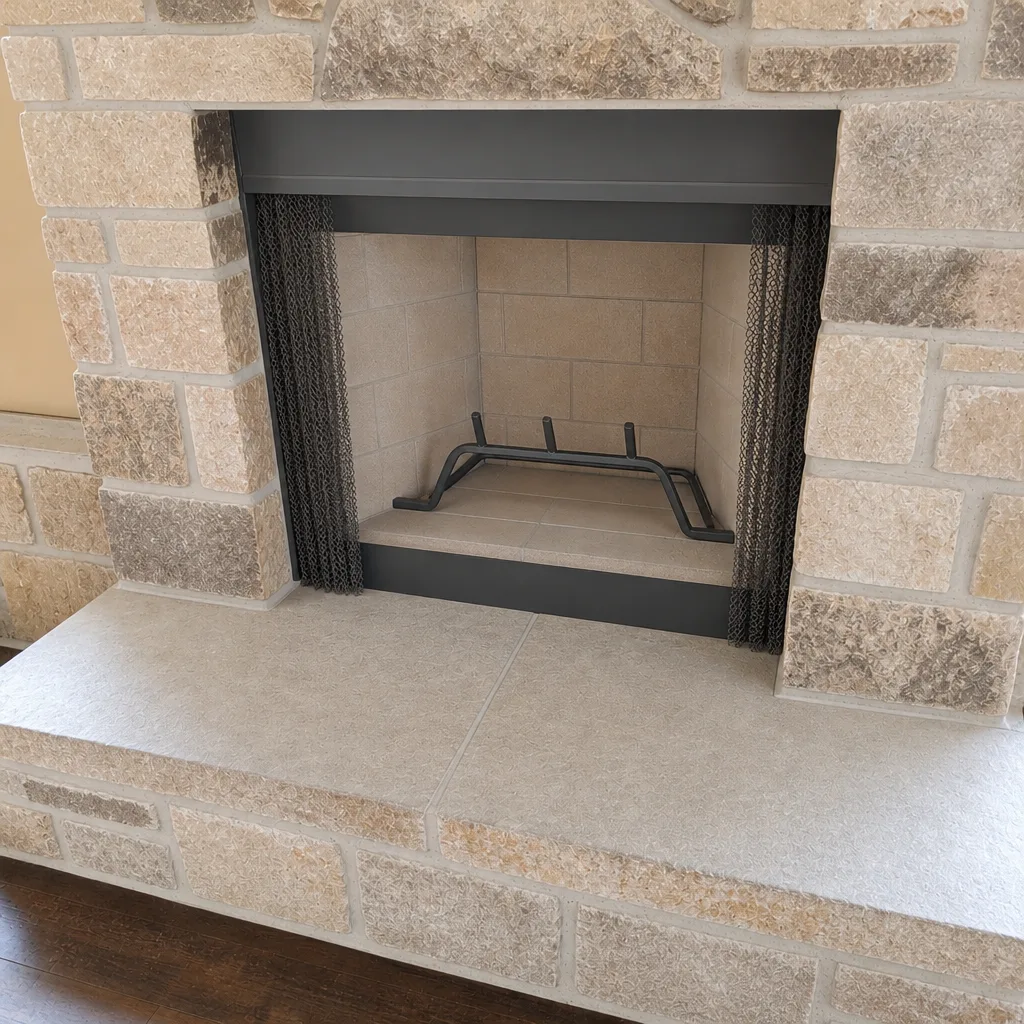 After
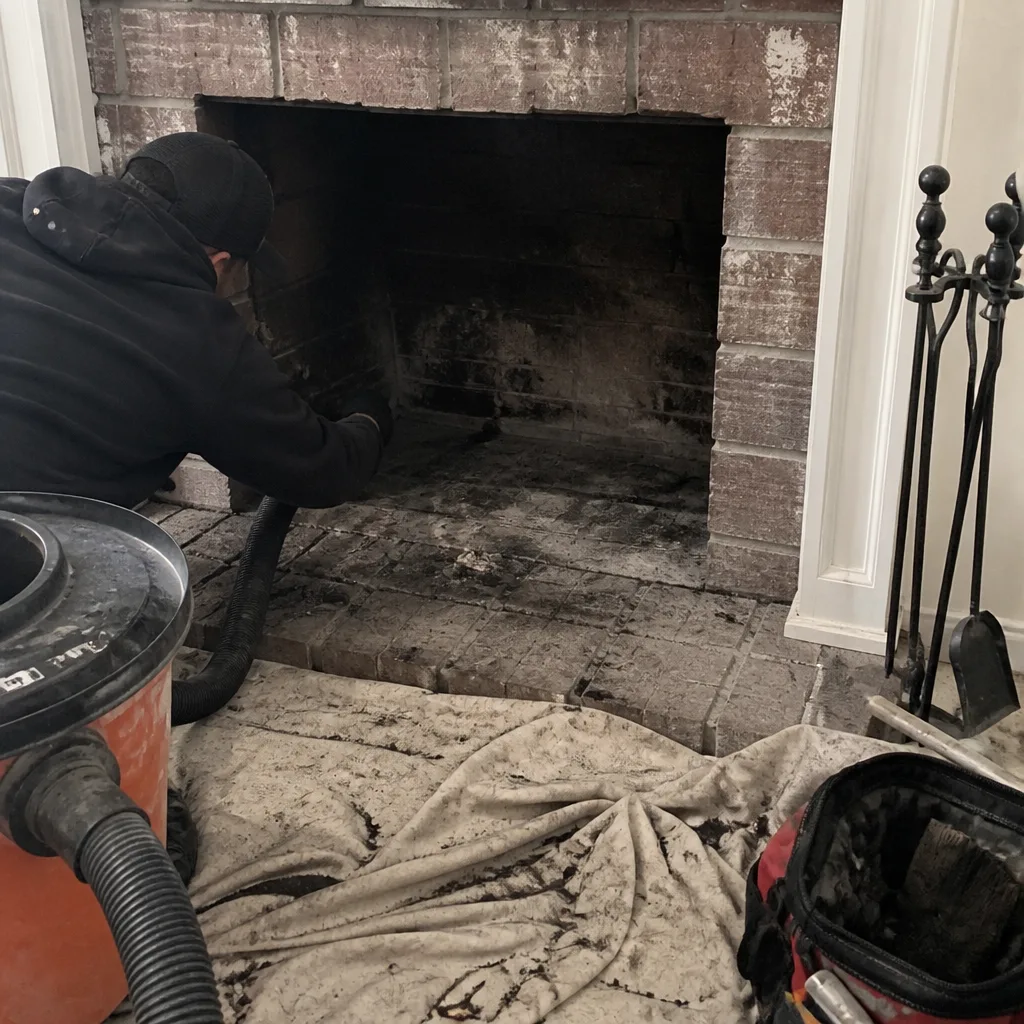 Before
 After
 Before
 After
How to Log Findings So You Can Show the History
Most homeowners who arrive at a repair have no idea when the problem started. That’s the gap a log closes. A simple written record of what you saw and when lets a technician understand the timeline rather than guess at it, and it keeps you from paying for inspections twice.
You don’t need anything fancy. A notes file on your phone, a folder of photos, or a simple paper log all work. What matters is what you record. Here’s a practical format:
- Date and item. Note the date and which checklist item you checked (crown, cap, flashing, damper, firebox, wall).
- What you saw. A short description in plain words. “Crown cracked along the top edge” or “damper sticky but closes.”
- A photo if you can get one. Ground-level photos of the crown, cap, and roof line are the most valuable. A photo of the flashing before and after a repair is worth more than any description.
- What you did about it. Did you call someone? Did a technician inspect it? Was anything replaced? Record the outcome.
- Next action and when. “Re-check flashing in spring” or “Schedule sweep in early fall.”
Bring that log to the next sweep. If a technician can see that the crown was cracked nine months ago and got worse after the spring rains, the recommendation writes itself. If it’s a new crack, they can say honestly whether it’s urgent or whether it can wait. The log is how you turn an inspection into a record of your chimney’s condition, not a one-off sales visit.
The Year-Round Maintenance Calendar
Here’s the whole checklist in one place, organized by season. Use this as the at-a-glance version.
- Early fall (before burn season): Professional chimney sweep and inspection. Interior pass: damper, firebox, walls. Confirm cap and crown. Clear the firebox.
- Through the burn season: Keep ash under control, watch for unusual smoke or smell, and stop burning if the flue seems blocked. Don’t burn trash or high-creosote wood.
- Late winter (after last burn): Interior visual pass. Check the firebox for water and the walls for stains. Look for efflorescence on the exterior.
- Spring (storm prep): Re-check the flashing, crown, and cap. Recommend any repair now, before the summer rain. Post-storm pass after any major rain.
- Summer: Post-storm checks. If you’re planning exterior work or the roof is being touched, look at the flashing seams again.
- All year: Keep the log current.
None of it is hard, and none of it needs a ladder. The routine is what makes the difference over time.
Common Mistakes to Avoid
- Only looking at the firebox. Most homeowners focus on the part they see every day and never look at the crown, cap, or flashing. Those three are where water intrusion starts in Alief, and they’re the part of the checklist most likely to be forgotten.
- Sweeping for creosote only, ignoring the damp. A clean flue that sits damp all shoulder season is still a chimney taking on water damage. Pair the sweep with the visual pass.
- Assuming a stuck damper is just wear. A damper that won’t open or close smoothly is often a moisture-and-rust signal, and it usually points to a problem higher up the stack. Have it looked at before assuming it’s a minor fix.
- Putting off the inspection because the fireplace is used rarely. A short burn season doesn’t mean a short checklist. The months when the fireplace is idle are exactly when moisture does its work, and the inspection is what catches it.
- Letting a contractor skip the camera. Any recommendation to line or repair the flue should come from a camera inspection that shows you what they see. If someone wants to sell you liner work without showing it to you, that’s a reason to get a second look.
- Skipping the log. If you don’t write down what you saw and when, every inspection starts from scratch. A simple log saves you from paying twice or guessing at a timeline.
- Assuming a leak means a rebuild. Water around the chimney often traces back to the cap or the flashing, not the structure. Get an honest inspection before accepting a large repair estimate.
When to Call a Professional
Some findings can wait for the next scheduled visit. Others shouldn’t. Call us for a professional look if you see water in the firebox after a storm, a damper that won’t open or close, cracked or crumbling firebox brick, flaking creosote inside the flue, an unexplained smell in the firebox, or a cap and crown you can see failing from the ground. The same goes for any new staining on the wall or ceiling around the fireplace, or a chimney that leans or has separated from the roofline. We can also work with your insurer if water damage has moved beyond the chimney itself. Chimney Sweep Alief offers free estimates in Alief; call (855) 337-1823 to book a look. Estimates are free, and the written estimate sets the final price.
Frequently Asked Questions
Most chimneys here do best with one professional sweep and inspection a year, scheduled in early fall before the burn season starts. A short burn season doesn’t reduce the importance of the annual sweep; it’s the moisture that builds during the quiet months that makes the inspection worth doing. Alief homeowners who burn more often may want a mid-season look. Call (855) 337-1823 for an exact quote; estimates are free.
Yes, for the visual parts. The ground-level pass and the interior pass are safe to do on your own with a flashlight and a pair of binoculars. Anything that involves a ladder, a chimney brush, the flue, or the liner should go to a certified sweep. That split is the whole point of the checklist: you handle what’s safe, and a professional handles the rest.
Water in the firebox after a storm means water is getting into the flue from above, usually through a failed cap, a cracked crown, or loose flashing. It’s a sign to get the system inspected before it does more damage. It doesn’t automatically mean a rebuild. A camera inspection and photo report will show exactly where the water is coming in, and the local pro can tell you whether it’s a simple fix or something bigger. Call (855) 337-1823 to get it looked at; the estimate is free.
Sometimes, yes, but only after an inspection shows it. A well-kept flue can go years without a liner issue. A damaged liner is a serious safety concern because it’s what protects the house from the heat of the fire and from carbon monoxide. Don’t take a liner recommendation on faith. Ask to see the camera evidence and the photo report before you agree to anything, and skip the repair if the flue turns out sound. If a liner repair is needed, we use HeatShield and DuraFlex, and the written estimate sets the final price.
Skipping one year usually doesn’t cause a disaster, but it does mean you’re flying blind on the three items most likely to fail: the crown, the flashing, and the damper. In Alief, that’s a year of damp shoulder season and heavy summer rain working on those weak points with nobody checking. The realistic risk is a small water problem that turns into a bigger repair, not a sudden emergency. An annual visual pass and a scheduled sweep keep that from happening. Call (855) 337-1823 to book your annual visit; the estimate is free.
Keep it short: the date, which item you checked, what you saw, a photo if you have one, and what you did about it. The log’s value is the timeline it gives a technician, so they can tell whether a crack is new or has been there for a season. Bring it to your next sweep. It’s the simplest way to turn a maintenance routine into a documented history.
The Bottom Line
The chimney maintenance checklist that actually helps an Alief homeowner is the one that covers the parts you don’t see every day. The crown, the flashing, and the damper are where most problems start here, and they’re all outside your normal field of view. This guide gives you a ground-level and interior routine you can run without a ladder, a clear line between what’s safe to do yourself and what needs a certified sweep, and a simple log to track it all. Pair the visual pass with an annual professional sweep and inspection, time the pass around Alief’s burn season and storm season, and you’ll always know what condition your chimney is in. That knowledge is what lets you judge any repair estimate on its merits instead of taking it on faith. When something in the checklist turns up, call (855) 337-1823. Estimates are free, and the written estimate sets the final price.
Contact
If the checklist turns up something, or if it’s just time for the annual sweep, call (855) 337-1823 for a free estimate. We answer 24/7. Fast dispatch from 7am to 7pm, Sunday through Friday. From an annual sweep to a full liner repair, one call handles it. Our technicians have up to 9 years of experience, and we use the materials chimney professionals trust: DuraFlex, HeatShield, Gelco, Olympia Chimney, Famco, and Copperfield. Whether you need a straightforward Chimney Sweep Alief visit or a closer look at a repair, we’ll assess honestly before recommending any work.
Written by the team at Chimney Sweep Alief.