
Last updated November 24, 2026
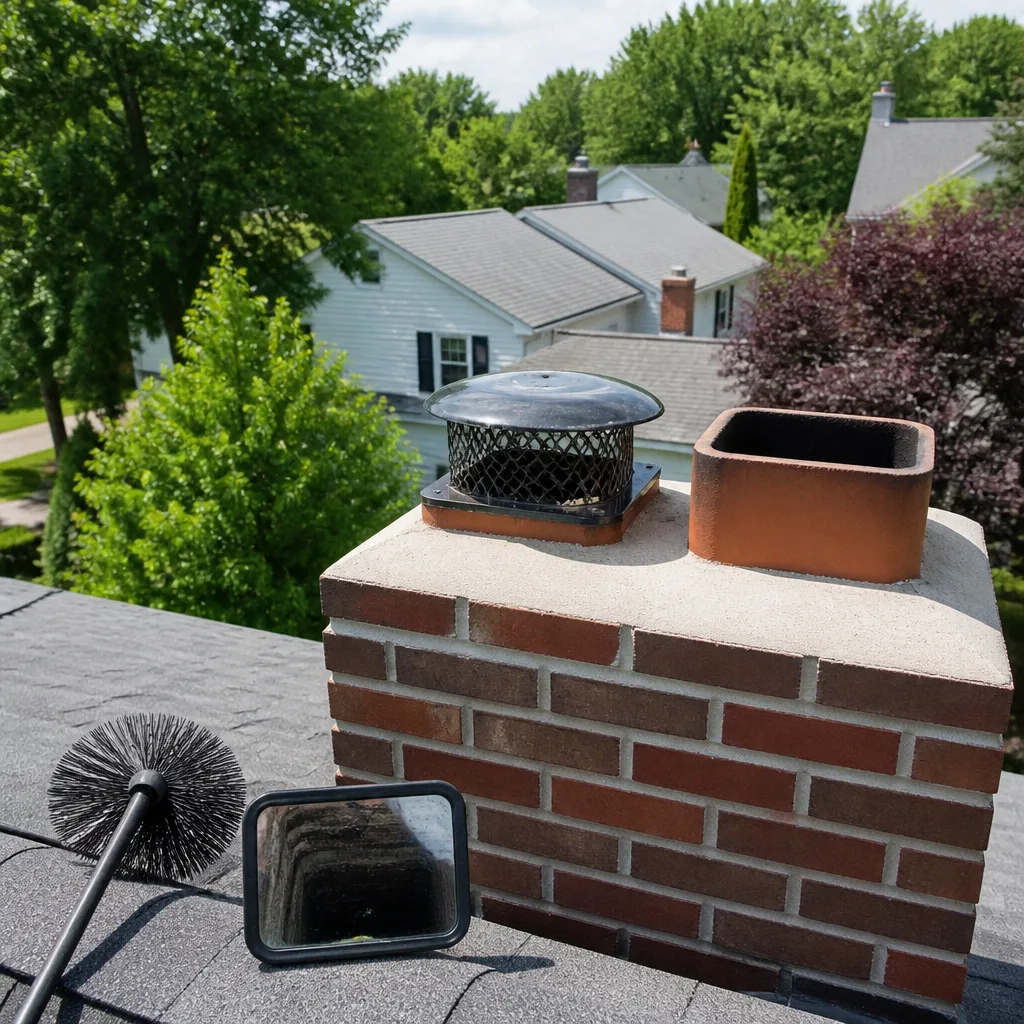 Sweep & inspection
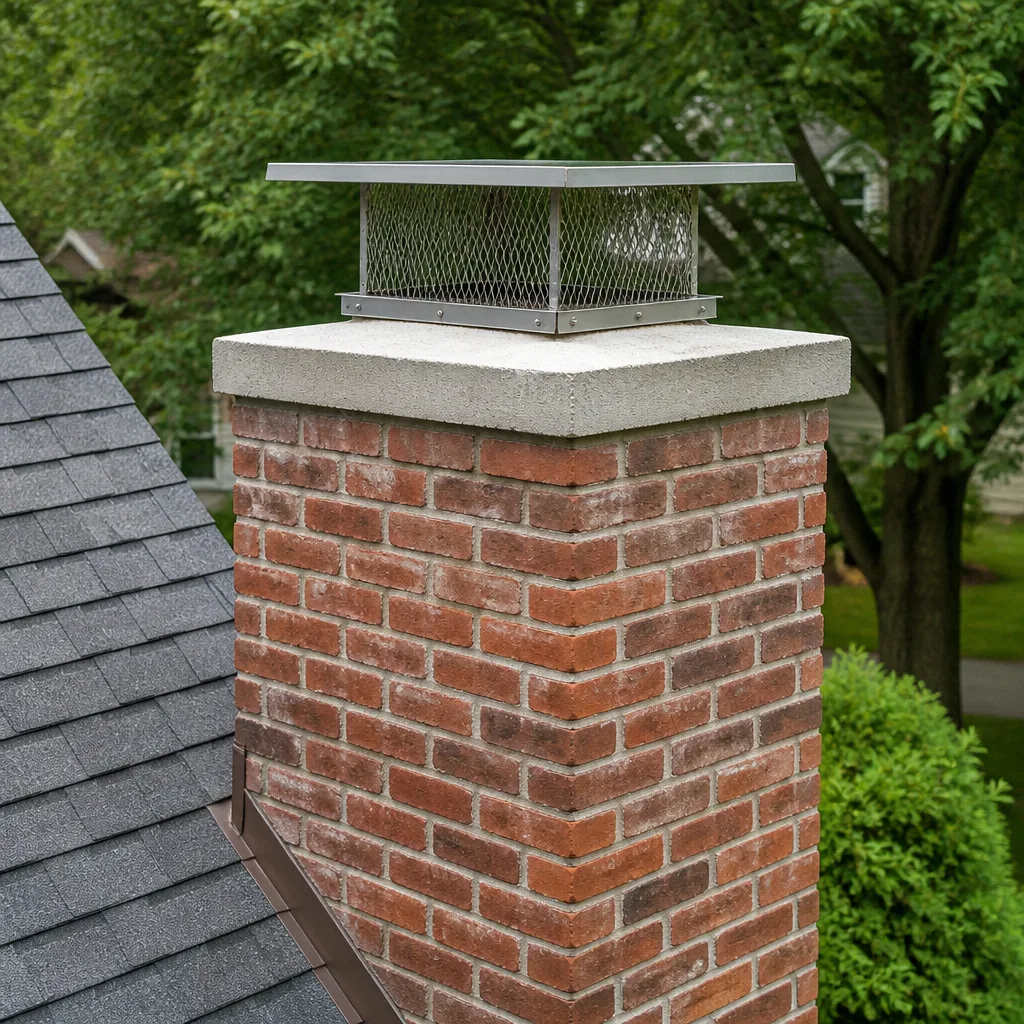 Caps & crowns
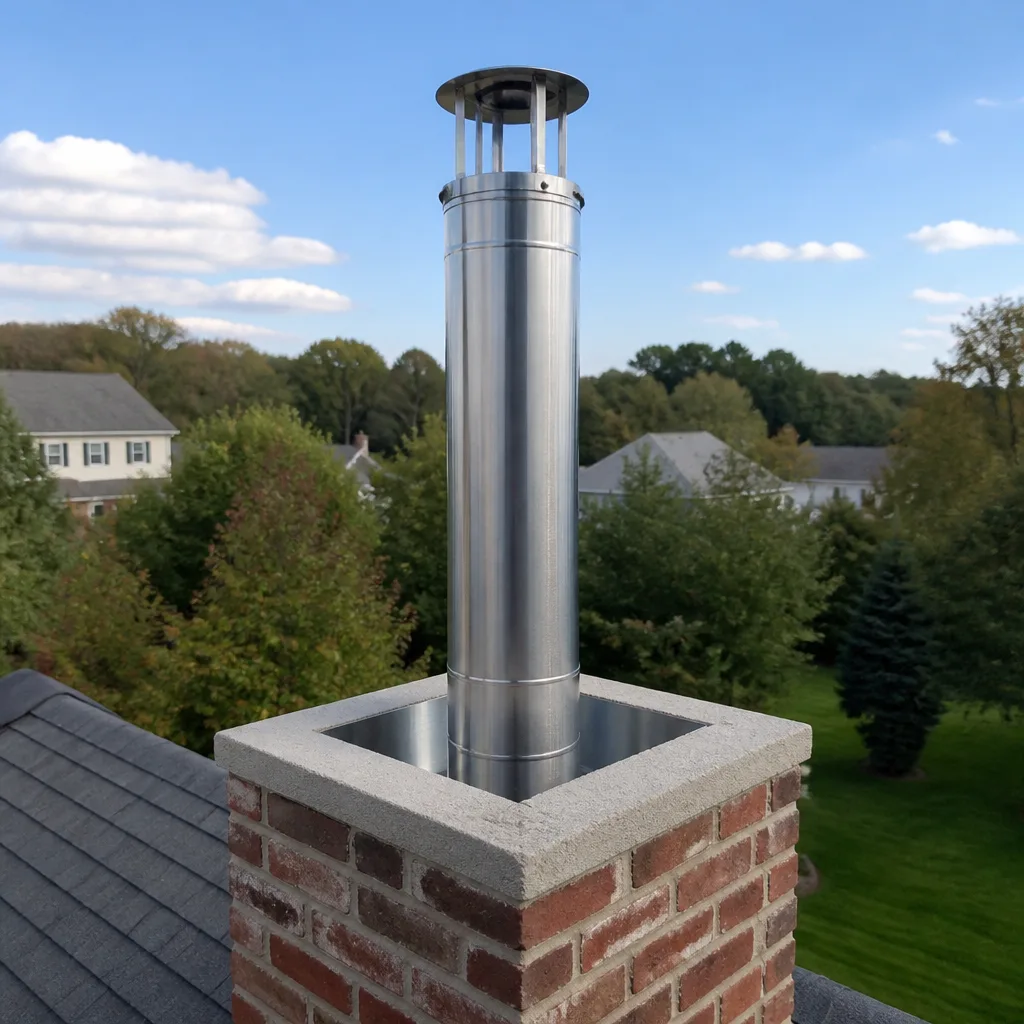 Flue relining
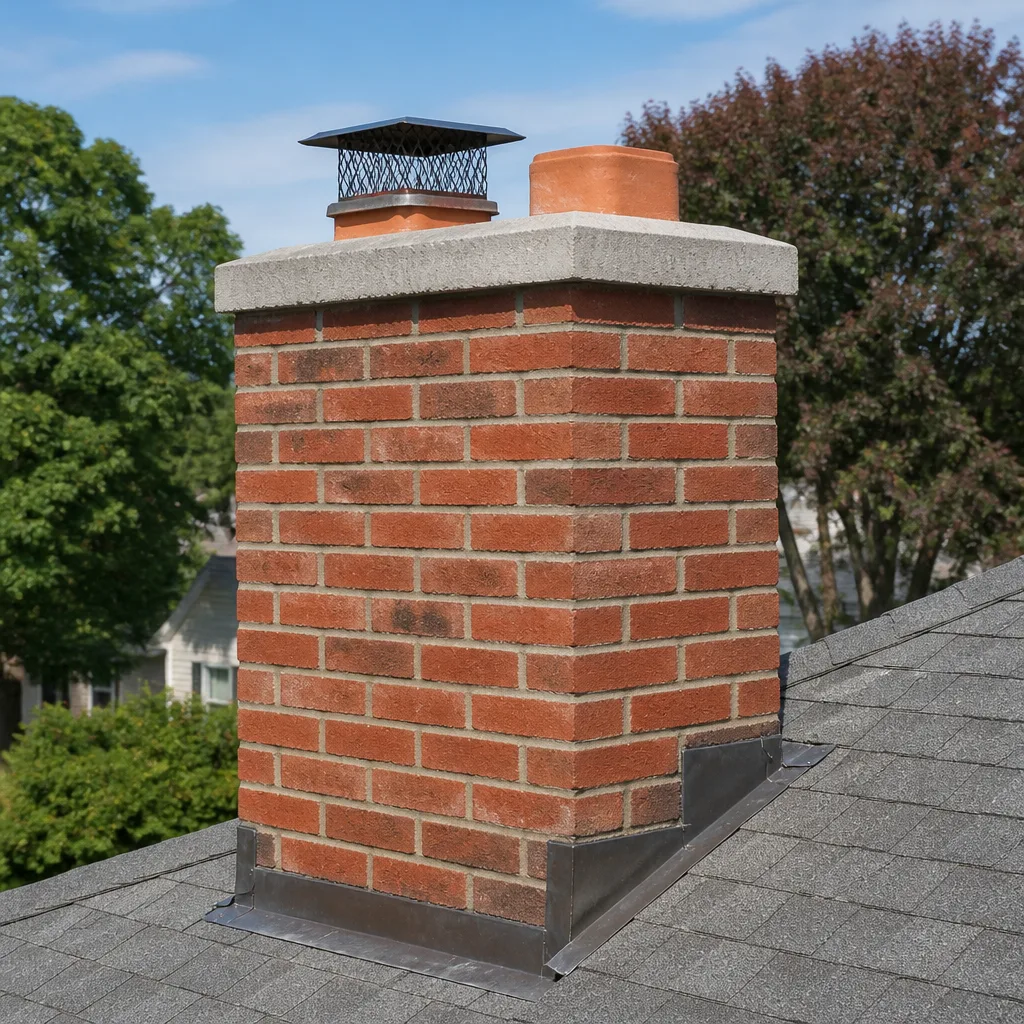 Masonry repair
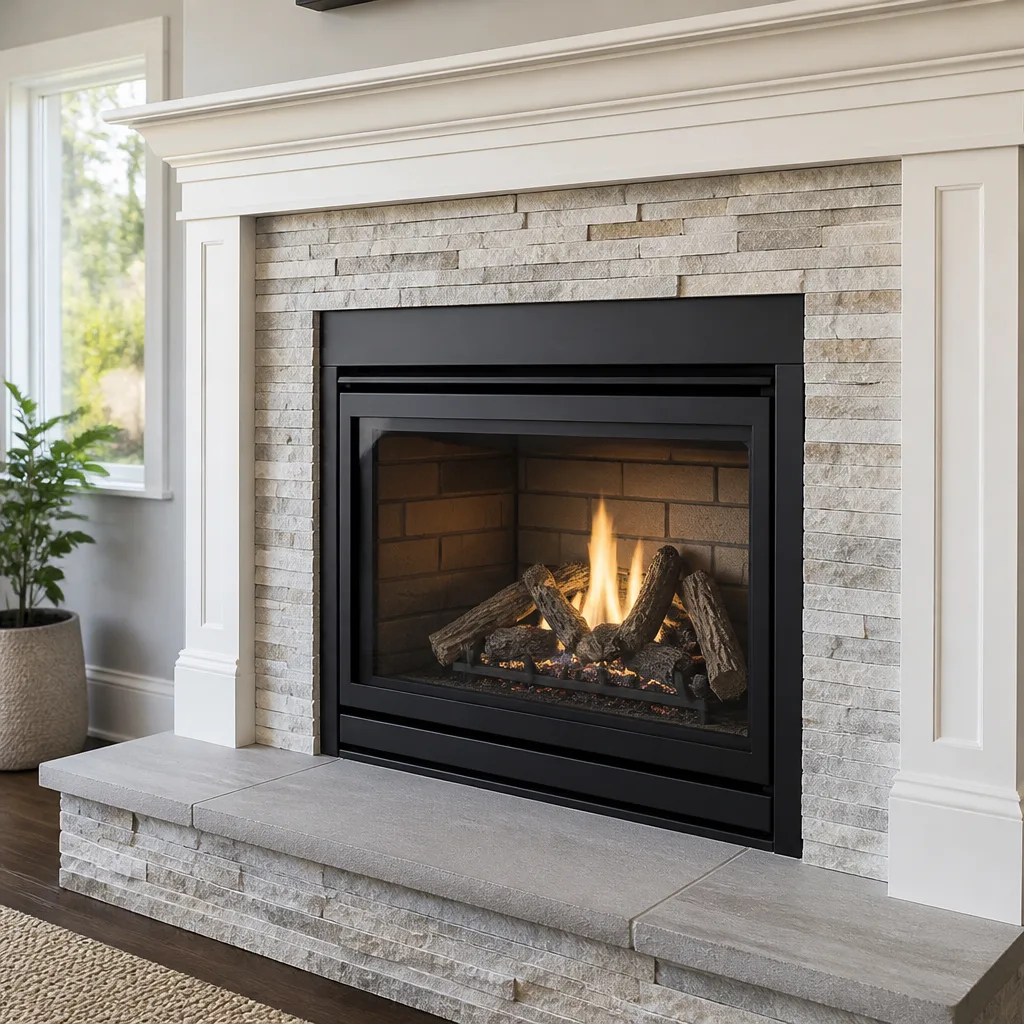 Gas fireplace service
Level 1 sweep and inspection to the NFPA 211 annual standard - flue, crown, cap, and flashing checked and photographed
Chimney sweep logs do not sweep chimneys. They loosen some creosote - which then falls where a brush and vacuum still have to collect it.
The Complete Guide to Chimney Cleaning in Alief
Most chimney guides are written for cold-climate homes that burn wood six months a year. Alief doesn’t work that way. Here, a fireplace gets used in short bursts through a mild winter, and that stop-and-start pattern actually produces a different, stickier kind of creosote than the long-burn buildup cold-climate guides describe. It’s harder to sweep, and it forms faster than most homeowners expect. This guide is written for Alief specifically: how the Gulf Coast climate changes what builds up in your flue, what a real cleaning visit involves, and how to check the work before anyone leaves your house.
Quick Answer
Chimney cleaning in Alief means removing soot, creosote, and blockages from the flue, and for most wood-burning fireplaces it should happen once a year, or sooner if you’ve burned more than a cord of wood or notice heavy buildup. Gas fireplaces in Alief still need an annual inspection and cleaning of the venting even though they produce no creosote. Humidity here accelerates liner wear between cleanings, so annual service isn’t just about fire risk; it’s how you catch corrosion early.
Styles & brands we work with
- Sweep & inspection
- Caps & crowns
- Flue relining
- Masonry repair
- Gas fireplace service
Table of Contents
- Why Alief’s Short Winters Make Creosote Harder to Remove
- How Alief Humidity Attacks Your Liner Between Cleanings
- What a Full Chimney Cleaning Visit Actually Involves
- Why Gas Fireplaces in Alief Still Need Annual Cleaning
- How to Verify the Cleaning Was Done Correctly
- How Often Should You Clean Your Chimney in Alief?
- Common Mistakes to Avoid
- When to Call a Professional
Why Alief’s Short Winters Make Creosote Harder to Remove
Creosote forms when wood smoke cools before it exits the chimney. In a cold climate, a fire burns hot for months straight, the flue stays warm, and the smoke shoots up and out cleanly. You still get creosote, but it tends to form as a drier, flakier glaze that a standard sweep removes without much drama.
Alief burns differently. A front comes through, the temperature drops, and an Alief homeowner lights a fire for two or three evenings, then lets it go cold for a week. When that fire relights, the flue is cold again, and cool flue means cooler smoke, which means more of it condenses on the liner walls. That condensation is a wetter, gummier deposit, and it clings to metal and clay in a way dry soot doesn’t.
What this means in practice:
- Stickier third-degree creosote. The hard, glazed layer that requires rotary cleaning or chemical treatment forms faster in intermittent-burn homes than in continuous-burn ones.
- More short, cool-burning fires. A fire that never reaches full burn produces more unburned smoke and more deposit per log than a hot fire does.
- Longer gaps between cleanings than you think you can afford. Because Alief homeowners burn less wood per season, they assume the chimney needs less attention. The opposite is often true for the reason above.
- Smoldering overnight logs. Banking a fire to burn slowly all night produces the heaviest deposit of all, and it’s a habit more common here than people admit.
This is why we don’t hand a national “once a year or every cord” rule to every Alief customer and call it done. How you burn matters as much as how much you burn. An Alief homeowner who lights five short fires a week in December and January can build up stubborn glaze faster than someone burning steadily for a month straight.
None of this is a reason to panic. It’s a reason to sweep on a real schedule and to actually look at what comes out of the flue. The deposit type tells you how your fire habits are working, and that’s something to know before the next cold snap.
How Alief Humidity Attacks Your Liner Between Cleanings
Between the fires, the chimney sits there in Houston-area air, and that air is wet. Humidity matters to a chimney because a flue is not sealed from the outside. A missing or rusted cap, a hairline crack in the crown, or a gap at the top of the clay tiles lets moisture in, and once it’s in, it has nowhere to go but down and into the liner walls.
The sequence is quiet and slow. A small amount of moisture films the inside of the flue. Creosote that’s already there absorbs it and softens, which changes how it behaves on the next burn. Metal liners start to show surface corrosion at seams. Clay flue tiles, which absorb water readily, can spall and flake on the inside where nobody’s looking. A masonry chimney with a slight water path can also degrade at the mortar joints over a stretch of seasons.
What’s easy to miss in a humid climate:
- Staining and efflorescence. White or brownish streaks on exterior brick often mean moisture is moving through the masonry, not just sitting on top.
- A draft that feels weak or inconsistent. A flue with softened creosote and water in it doesn’t pull the way it should.
- Odors when the fireplace is off. A damp flue smells, especially in warmer months. That smell is the chimney telling you something is trapped.
- Cap condition. The cap is the single most protective piece of hardware you have against moisture. If it’s missing, loose, or rusted, the liner is taking on water every time it rains. That’s why chimney cap & crown work and cleaning belong on the same checklist here.
The practical takeaway is that annual cleaning in Alief is partly a moisture inspection. A technician who sweeps your flue but never looks at the cap and crown has done half the job. We check both on every visit, because in this climate the water intrusion problem tends to show up before the fire problem does.
What a Full Chimney Cleaning Visit Actually Involves
Most homeowners have never watched a chimney get cleaned and aren’t sure what they’re paying for. Here’s the sequence, in the order it usually happens. Knowing it takes the guesswork out of the appointment and lets you ask useful questions while the technician is on site.
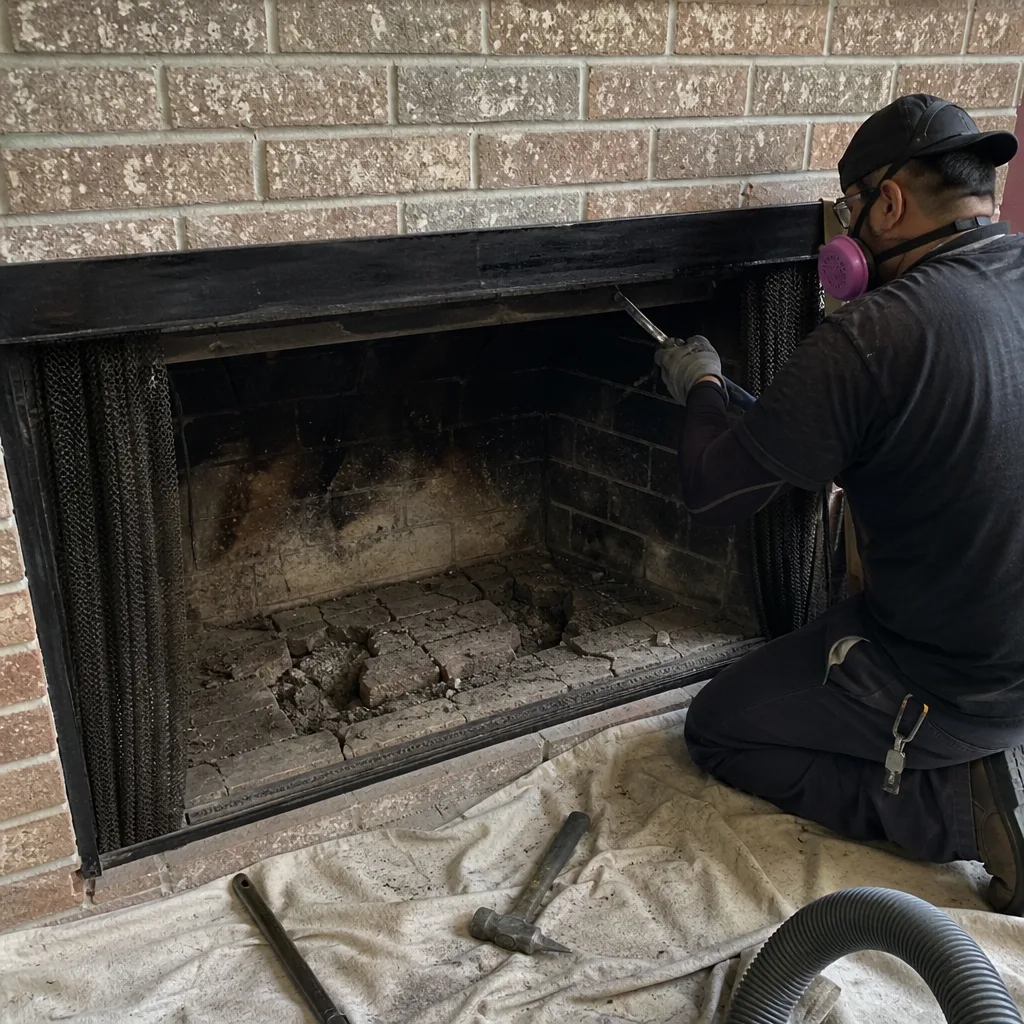
- Protect the room first. Drop cloths go down around the hearth, and a sealed containment unit or plastic shield covers the firebox opening so soot and dust can’t escape into the room. If a technician starts sweeping without floor protection in place, that’s a red flag.
- Set up the work area and tools. Brushes, rods, and the vacuum system are staged before anything is loosened. A HEPA-filtered vacuum runs the whole time to keep the air in your home clean.
- Inspect what’s visible before sweeping. The firebox, damper, smoke chamber, and accessible flue are checked first. This is where the technician notes anything unusual before it gets covered in soot.
- Sweep the flue with the right brush for the liner type. A metal liner gets a different brush than clay tile. Rotary equipment handles glazed creosote that a hand brush leaves behind.
- Clean the firebox, smoke shelf, and smoke chamber. The smoke chamber above the damper is a common hiding place for deposits, and it’s part of the job, not an add-on.
- Clear the top from the roof. When safe roof access is available, the technician finishes from the top and checks the cap, crown, and flue opening at the same time.
- Run a camera through the flue. A camera inspection shows the actual condition of the liner walls, seams, and joints. You should be shown the footage, not just told about it.
- Report what was found and recommend only what the evidence supports. No recommendation without a reason you can see for yourself.
The visit for a straightforward wood fireplace typically takes a couple of hours from arrival to cleanup. Heavier deposit, a gas appliance, or repair work extends that. When a technician suggests a bigger job, such as a fireplace repair or liner resurfacing, that recommendation should follow the camera inspection, never come before it.
Why Gas Fireplaces in Alief Still Need Annual Cleaning
“It’s just gas, so there’s nothing to clean” is one of the most common assumptions we hear in Alief, and it’s wrong. A gas fireplace doesn’t make creosote, so a lot of homeowners skip service entirely. But a gas chimney is a venting system like any other, and it’s still moving exhaust gas out of your house every time you use it.
What actually happens inside a gas fireplace and its venting:
- Dust and debris accumulate in the firebox and burner. Dust burns off as deposits that can clog burner ports and upset the flame pattern.
- Birds, insects, and nests block the vent cap. Any opening a bird can get into is an opening it will use. A blocked vent on a gas appliance means exhaust has nowhere to go but back into the room.
- Vent gaskets and seals degrade. A worn gasket lets exhaust leak before it reaches the top of the vent.
- Carbon monoxide is the real concern. Gas burns clean, but incomplete combustion and a blocked or leaking vent can put CO into your home without any visible clue. An annual inspection is how you catch a venting problem before it becomes a health problem.
- Moisture damage carries over. The cap and crown protecting your flue don’t know whether you burn wood or gas. Water intrusion is the same risk either way.
We treat gas fireplace service differently from wood-burning service because the risks are different, but the annual cadence is the same. An honest inspection tells you the real condition of the venting. If it’s clean and sound, we’ll tell you so, and you don’t spend money on repairs you don’t need. If a gasket or a vent component needs attention, Gelco and Olympia Chimney venting parts are the kind of professional-grade components we work with for that.
Every gas appliance in a home is a good candidate for a carbon monoxide alarm on the same floor, and we recommend one regardless of what the inspection finds. That’s a basic safety habit, not a sales pitch.
How to Verify the Cleaning Was Done Correctly
You don’t have to be a chimney professional to know whether a cleaning happened. There are things you can see and check for yourself before the technician packs up. Run through this list while they’re still on site.
- Ask for the camera footage. A proper cleaning visit includes a look inside the flue. If the technician can’t show you the inside of your own chimney, ask why.
- Look at the firebox and smoke shelf. A cleaned firebox is free of soot buildup. The smoke shelf above the damper should be clear too. If there’s a visible soot layer left behind, the job isn’t finished.
- Check the damper. It should open and close smoothly and sit flush when closed.
- Confirm no soot in the room. A respectful cleaning leaves the space as clean as it was found. Soot on the floor, hearth, or furniture is a sign the containment wasn’t set up properly.
- Understand the report. A good technician tells you what the flue looked like, what was removed, and what needs attention, and explains the evidence behind any recommendation.
- See a written estimate for any suggested work. Repair recommendations should be itemized with a price. General language about “needing work” is not a diagnosis.
One more thing to verify: that the technician looked at the top of the chimney, not just the bottom. The cap and crown are where moisture enters, and they’re the top of the system. A cleaning that stops at the firebox isn’t a full assessment. This is the piece of the visit that’s easiest to skip and most important to confirm.
How Often Should You Clean Your Chimney in Alief?
Once a year is the baseline for a wood-burning fireplace, and Alief is no different, but the annual rule bends around how you actually burn. Use this as a starting framework, then let a real inspection refine it for your specific system.
- Wood-burning used a few evenings a season: Annual cleaning and inspection. The intermittent-burn creosote pattern here is the reason not to stretch this out.
- Wood-burning used most of the winter: Annual cleaning, and consider a mid-season check if you burn more than a cord of wood or notice a stronger smoke smell indoors.
- Burning any amount of green or unseasoned wood: Clean more often. Wet wood produces more creosote per log, no exceptions.
- Gas fireplace or gas logs: Annual inspection and vent cleaning, regardless of how often you run it.
- Newly purchased older home in Alief: Get a cleaning and inspection before the first fire, even if the seller says it was recently serviced. You don’t have that record; get your own.
- After a storm or a long vacancy: Check the cap and flue for nests and debris before the first burn of the season.
There’s also a code question worth mentioning, because homeowners often ask. Chimney codes and clearances determine what a safe installation looks like, and most of them are typically handled by the standards a chimney professional follows when installing or repairing a liner. When a repair or liner replacement is being recommended, ask the technician to explain what standard they’re meeting. You deserve that explanation in plain English.
Cleaner burning reduces how often you need this service. Seasoned wood, hot fires, and not smoldering overnight logs all help. But no burning habit in a humid climate lets you skip the annual check for very long.
Common Mistakes to Avoid
- Assuming a gas fireplace needs no service. It doesn’t make creosote, but its vent still clogs, still leaks, and still needs an annual check. Skipping gas fireplace service is a safety gap, not a money saver.
- Burning wood in a short, cool, smoky fire to “save” on fuel. Cool fires are exactly what produces the sticky creosote this climate is prone to. A hot, clean burn is easier on the chimney and produces less to sweep.
- Hiring a sweep who never shows you the flue. If no camera footage or inspection report is offered, you can’t verify that the cleaning addressed the real condition of the chimney.
- Ignoring the cap and crown because they aren’t the “fire” part. The cap and crown are the leading sources of water intrusion into a chimney. In humid Alief, that matters every rainy season.
- Buying a repair recommendation without evidence. A liner or masonry repair is a real expense, and it should be backed by footage and a clear explanation. Legitimate work holds up to the question “show me.”
- Putting off the first cleaning in an older home. Seller records, if they exist at all, don’t tell you the real condition of the flue today. Get it inspected before you use it.
- Forgetting the chimney when you check the smoke and CO alarms. A working alarm and a clean, inspected flue are a matched set. Test the alarms when you set up the annual chimney appointment.
When to Call a Professional
Some jobs in a home can wait for a weekend. Chimney work usually shouldn’t. Call a professional when smoke rolls back into the room instead of going up, when you smell a strong creosote odor or a gas smell with the fireplace off, when you see soot or water staining on the outside of the chimney, when a bird or animal has gotten into the flue, or when the cap is loose or missing. Call before the first fire of the season in a home you just bought. And call if the last cleaning didn’t come with an inspection, because you don’t actually know what’s inside. Chimney Sweep Alief offers free estimates in Alief, TX, so there’s no downside to having it looked at. Call (855) 337-1823. We answer 24/7. Fast dispatch from 7am to 7pm, Sunday through Friday.
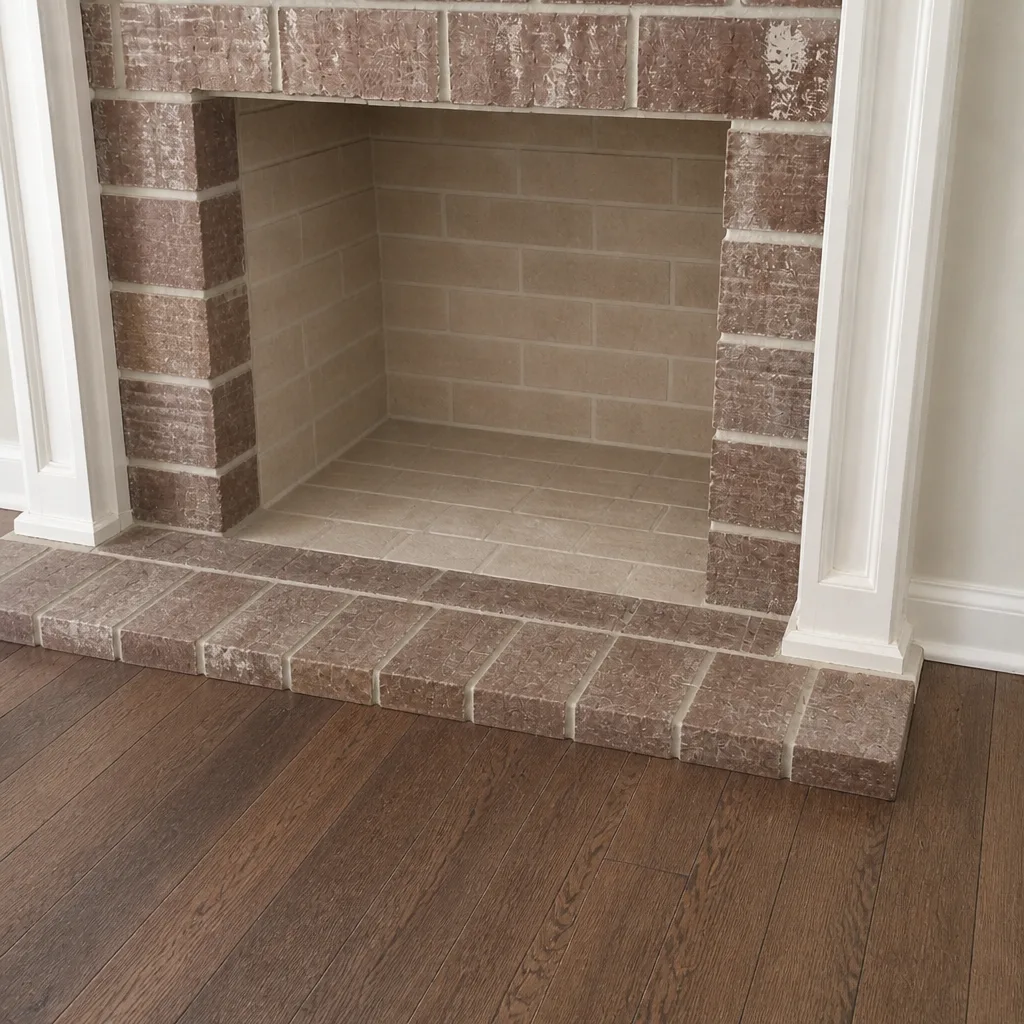
See the difference
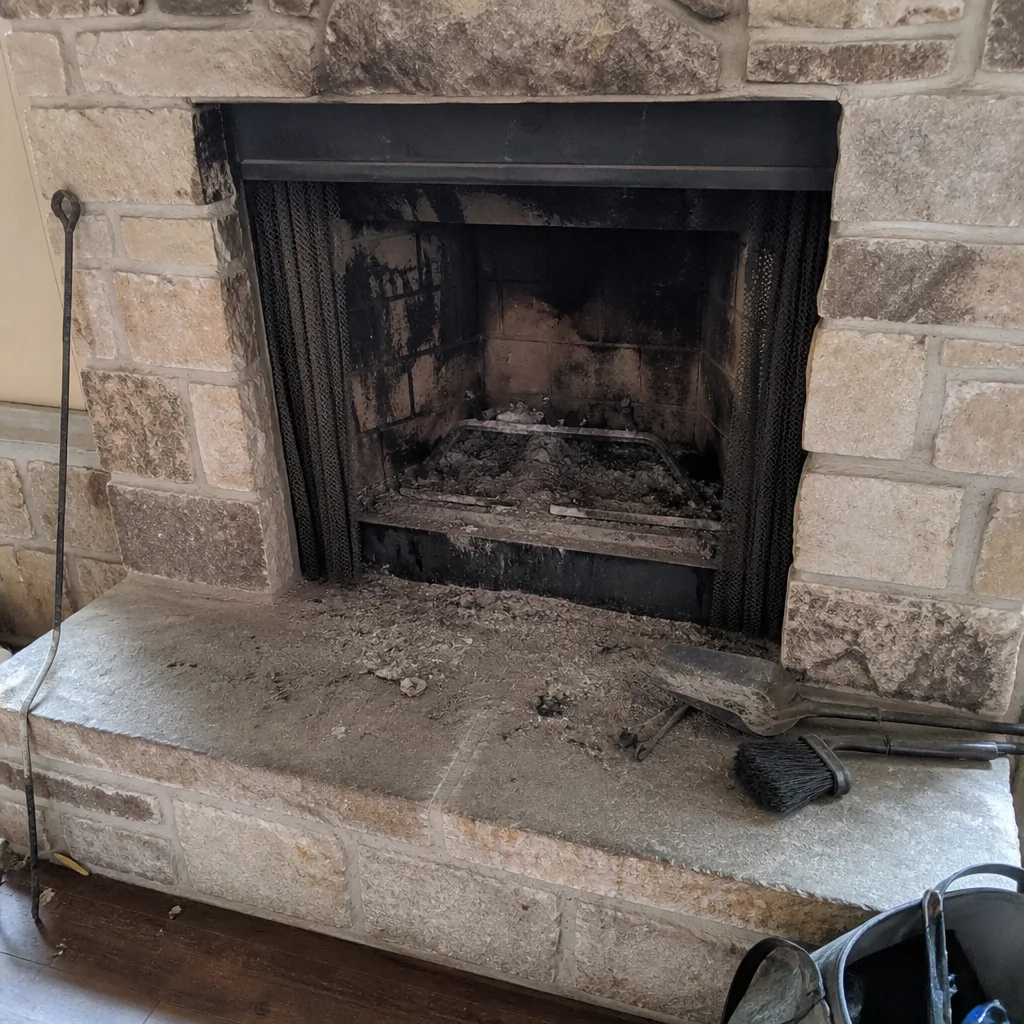 Before
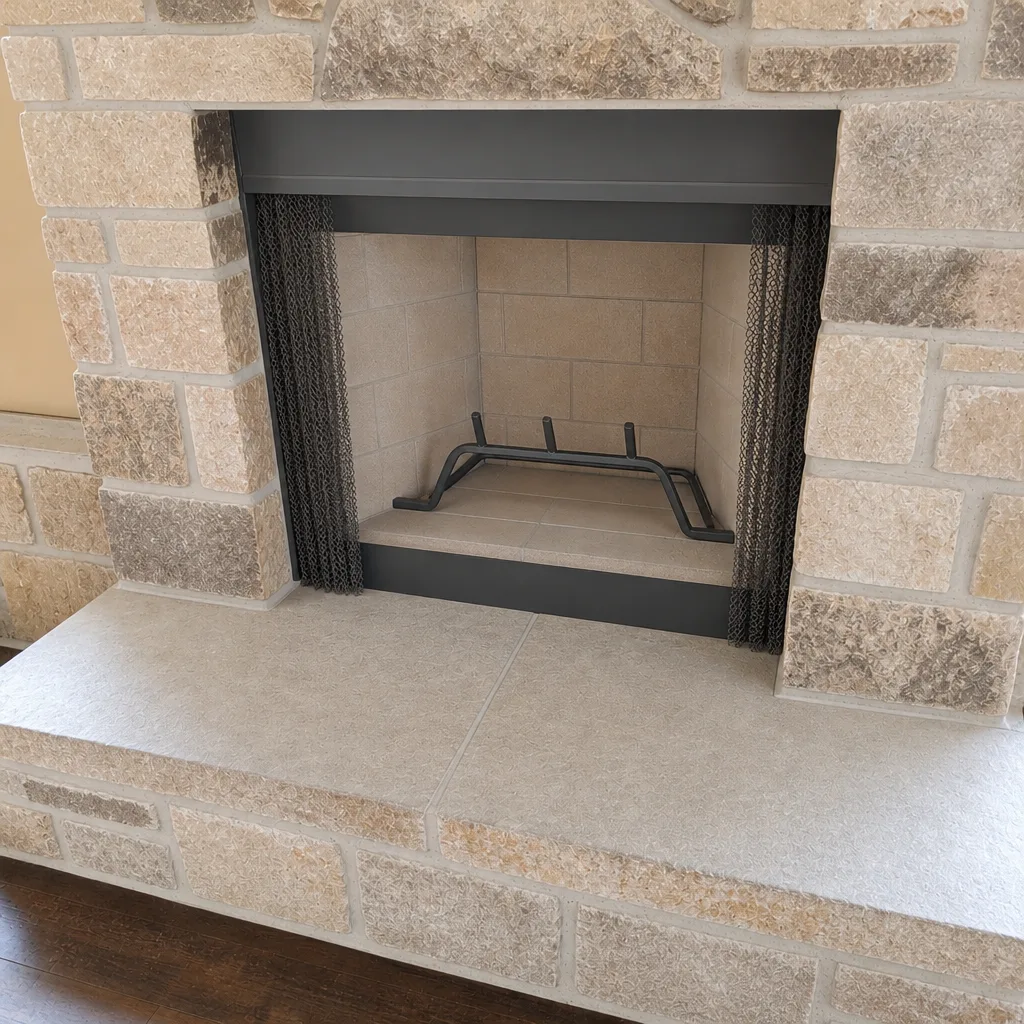 After
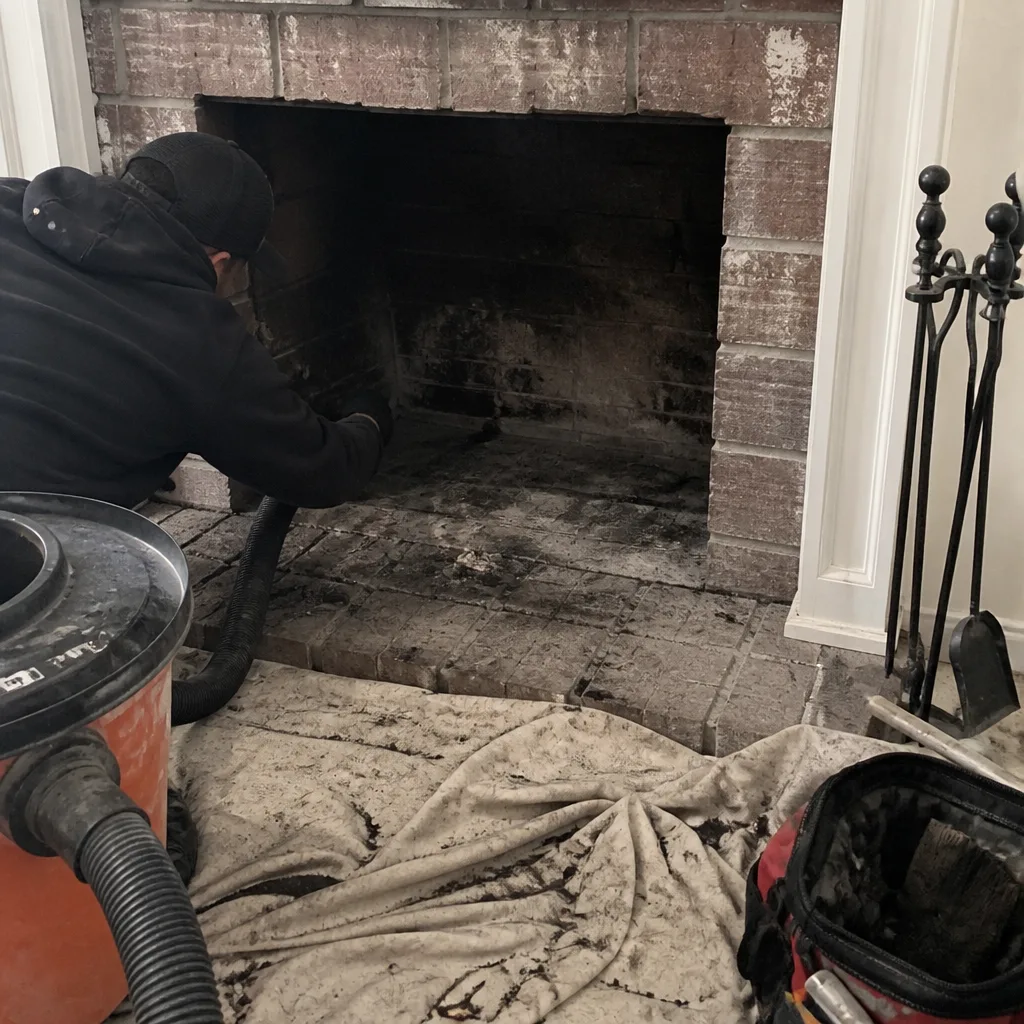 Before
 After
 Before
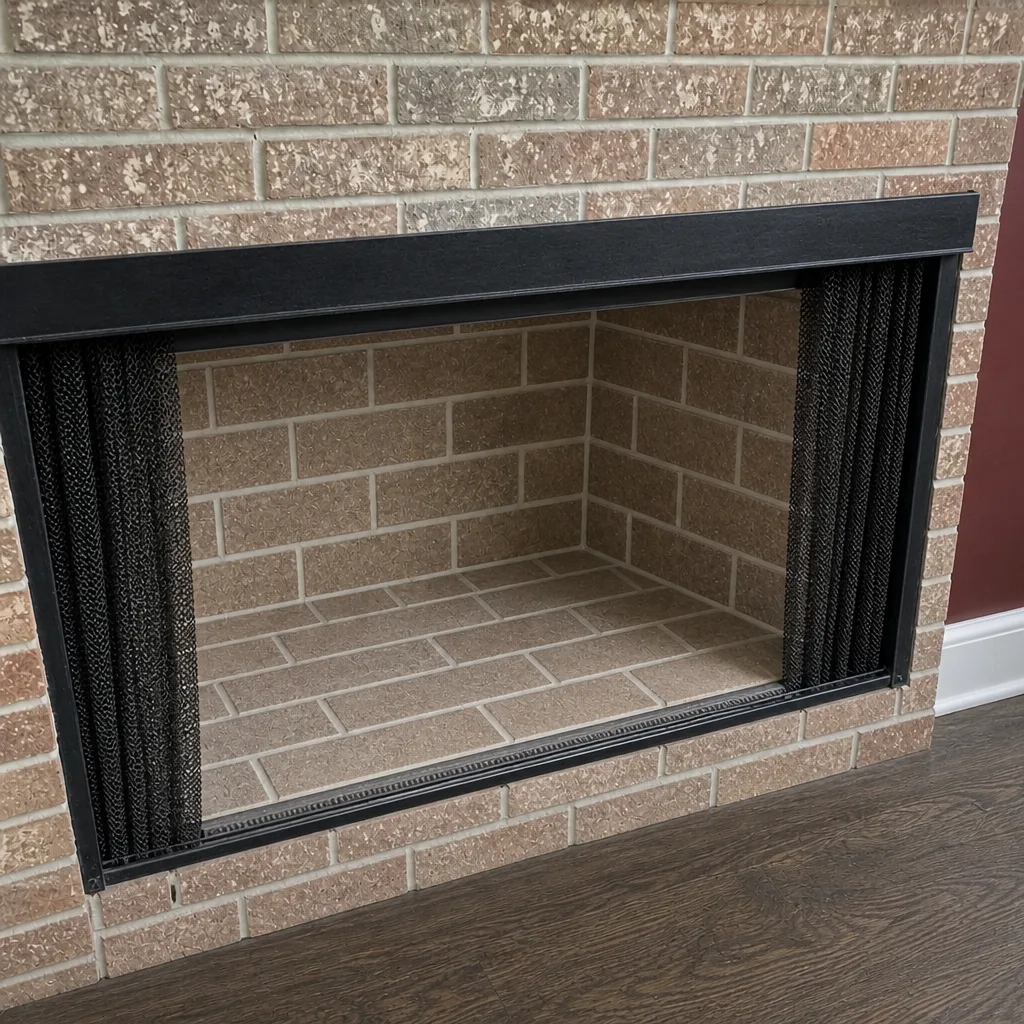 After
Frequently Asked Questions
Chimney cleaning in Alief is priced per job based on the liner type, the amount of deposit, and whether a camera inspection is included, so the written estimate is the final word. The estimate itself is free, and a technician won’t set a price until they’ve assessed your chimney. Call (855) 337-1823 for an exact quote.
Only if the inspection shows the existing liner is cracked, corroded, or improperly sized for your appliance. A liner repair is sometimes possible with a resurfacing system rather than a full replacement, and HeatShield is one of the systems we work with for exactly that. You should be shown the evidence before any recommendation, and if the liner is sound, you’ll hear that instead. Call (855) 337-1823 to get it looked at.
Once a year for wood-burning fireplaces, and annually for gas fireplaces as a venting inspection and cleaning. In Alief, the intermittent-burn pattern tends to build glazed creosote faster than the amount of wood burned would suggest, so annual is the safe baseline rather than a stretch goal. Call (855) 337-1823 to book the sweep.
Creosote accumulates in the flue with every fire, and in a humid climate the same flue is also taking on moisture, so skipping cleanings leaves you with two problems at once. A heavy creosote layer is flammable and is a leading cause of chimney fires, and an unexamined liner can move from a small problem to a serious one without a symptom you’d notice. Neither risk is worth the money you save. Call (855) 337-1823 for an honest assessment.
Yes. Gas fireplaces don’t create creosote, but their firebox, burner, vent, and cap still collect dust and debris, and gaskets wear out. An annual gas fireplace inspection checks venting and combustion with a focus on carbon monoxide safety. Call (855) 337-1823 to schedule one.
Yes. A camera inspection tells us the actual condition of your flue, and if nothing needs attention we’ll say so. We don’t recommend repair work without footage you can look at yourself, because a chimney is not something you should have to take on faith. Call (855) 337-1823 for a free estimate.
The Bottom Line
Chimney cleaning in Alief is not a cold-climate routine applied to a warm place. Intermittent fires build stickier creosote here, humidity works on your liner between cleanings, and a gas fireplace still needs annual vent service even though it never produces soot. Annual cleaning plus an inspection you can see is the whole strategy, and it catches moisture problems before they turn into liner repairs. From annual sweep to full liner repair, one call handles it, and the materials are the ones chimney professionals rely on: DuraFlex, HeatShield, Gelco, Olympia Chimney, Famco, and Copperfield. See the full range of what we do at Chimney Sweep Alief, or book a service directly.
Contact
Whether you’re due for an annual service, you just bought an older home in Alief and want to know what’s in the flue, or you’re ready to move forward with chimney sweep work and want a straight answer on cost, call us. You’ll get a free estimate, a written price before anything is booked, and a recommendation backed by camera evidence you can see for yourself. Call (855) 337-1823. We answer 24/7. Fast dispatch from 7am to 7pm, Sunday through Friday.
Written by the team at Chimney Sweep Alief.